














LETTER TO THE SHAREHOLDERS
September 23, 2026
Napoleonville, LA IFUS:OTCID
As the IFUS Scientific Team continues its work on the IFUS White Paper (Part 1: Intact Nutrition™ (Intact Digest™ & Intact Endurance™) with Nutri-Mastic™: Effect of Chios Mastic Gum (Pistacia lentiscus) combined with Ionic Minerals on Cardiovascular Function Rev.1a-21May26-ifus), it is once more exploring new science, while reviewing science from published studies like Chios Mastic Gum: A Promising Phytotherapeutic for Cardiometabolic Health (https://www.mdpi.com/2072-6643/16/17/2941).
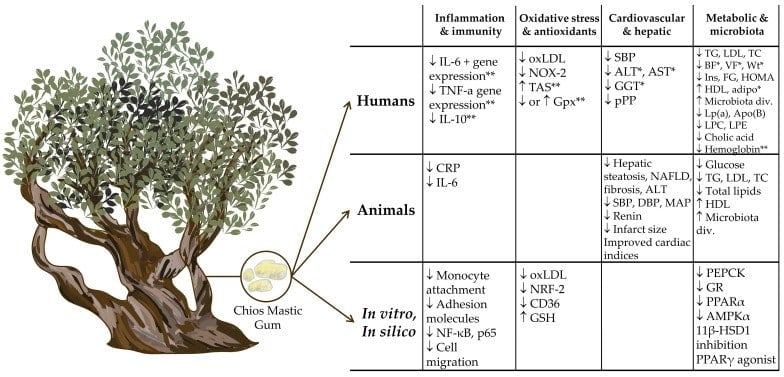
Found above and below are excerpts from the study performed by S.A. Blomquist, et al. For purposes of an initial perusal of the information, highlights of significant interests and studies conducted on Humans are provided. Please note CMG / CGM are abbreviations for Chios Mastic Gum.
HOWEVER, IFUS STRONGLY recommends that everyone should CAREFULLY read the entire excerpt as well as the entire study before making any decision based on the information below as to the application of ANY IFUS product line. This includes consulting a physician about any and all medical conditions, medicines, other supplements, or any other health issues.
2. Evidence for the Utility of Chios Mastic Gum in the Treatment and Management of Cardiometabolic Disease
2.1. Human Studies
The effects of CMG supplementation on lipids and lipoproteins, hepatic, cardiovascular, and general metabolic health has been explored in clinical trials and is described below. One of the earliest reports [50] evaluated the hypolipidemic effects of CGM when given at a high dose (5 g/d) (n = 48) and observed decreases in plasma cholesterol (TC), TG, TC/HDL ratio, lipoprotein (a), apolipoprotein A-1, and apolipoprotein B after 18 months. In contrast, a group of patients who received the low dose (~0.7 g/d) (n = 85) for 12 months exhibited no changes in lipids. As a result of high-dose CMG supplementation, decreases in serum alanine (ALT), aspartate transaminase (AST), and gamma-glutamyl transferase were also observed, indicating the hepatoprotective properties of CMG. Differential sex effects were discovered as well, where beneficial effects of CMG on total cholesterol (TC), lipoprotein (a), and serum glucose (in the low-dose group) occurred in males. This study suggests high doses, longer duration, and sex play a role in the outcomes of CMG supplementation.
Fukawaza et al. [51] investigated the effects of mastic powder (MP) (5 g/d) compared to a placebo or to mastic powder plus physical activity (measured as steps/day) (MP + PA) in a limited population of 21 Japanese men (aged > 40) at 3 and 6 months. MP and MP + PA reduced serum TG as early as 3 months when compared to controls. In addition, MP alone reduced insulin and HOMA-IR values at 6 months, while MP + PA potentiated the effects and reduced insulin and HOMA-IR as early as 3 months. However, no changes were observed in body composition, blood pressure, liver function, or other lipid parameters.
Kartalis et al. [52] analyzed data from 156 hypercholesterolemic subjects (TC > 200 mg/dL) to evaluate the effects of CMG or its individual components on plasma lipids and fasting plasma glucose (FPG) levels. They allocated subjects to four groups: control, CMG, polymer-free CMG, or powdered CMG. Interestingly, reductions in both TC and FPG were only observed in those individuals who consumed the whole CMG, indicating that the beneficial effect of CMG is potentially strengthened by the combination of polymeric, essential oil, and triterpenic fractions. No changes were observed in plasma LDL-C, HDL-C, and TG, or secondary measures such as uric acid or C-reactive protein (CRP) [52].
A recent study by Gioxari et al. [53] recruited 94 subjects who were metabolically unhealthy and were allocated to either the daily consumption of 200 mg CMG EO or a control group for 3 months. Those subjects allocated to the CMG group exhibited a lowering of plasma TG and LDL-C when compared to the control group. Additionally, improvements in anthropometric parameters, such as weight, percentage of body fat and visceral fat, and body mass index, and in hepatic and cardiovascular markers, such as ALT and systolic blood pressure (SBP), were demonstrated in the treatment group. The investigators also observed beneficial effects on oxidation as documented by decreases in oxidized LDL, a major biomarker of oxidative stress and atherosclerosis [54], and increases in adiponectin, an adipokine that protects against inflammation and type 2 diabetes [55]. No changes were observed in inflammatory markers such as tumor necrosis factor alpha (TNF-α), CRP, or interleukin-6 (IL-6), although there were improvements in the self-reported quality-of-life measures [53].
The MAST4HEALTH study that was conducted at three clinical trial sites (Greece, Italy, and Serbia) evaluated the effects of CMG in people diagnosed with non-alcoholic fatty liver disease (NAFLD) [56,57]. For these studies, obese patients with NAFLD were randomly recruited and allocated to CMG (n = 41) or a placebo (n = 57) for 6 months. Notably, the MAST4HEALTH study employed nutritional counseling to allow for body weight regulation up to 5% of initial body weight. Amerikanou et al. [56] evaluated NAFLD severity utilizing magnetic resonance imaging, conducted metabolomics and a microbiota analysis, and measured clinical biomarkers to examine the associations with CMG treatment [56]. For the NAFLD severity results, only individuals with a BMI > 35 kg/m2 demonstrated an improved iron-corrected T1 and liver inflammation fibrosis score compared to the control. CMG also improved microbiota dysbiosis by decreasing the number of Flavonifractor, a microorganism known to cause inflammation. However, no differences in clinical lipid or metabolic markers were observed when the treatment and control groups were compared. The metabolomic analysis revealed significant reductions in lysophosphatidylcholine (LPC), lysophosphatidylethanolamine (LPE), and cholic acid in the CMG group. Notably, LPC stimulates the release of hepatic extracellular vesicles from hepatocytes which contain pro-inflammatory cargo and ultimately stimulate inflammatory cascades [58]. LPC also serves as a marker of PC depletion and is associated with membrane dysfunction, lipotoxicity and inflammation [59,60]. Altogether, the data suggest the improvements from CMG in individuals with severe obesity may be due to interactions between gut microbiota, bile acid synthesis, and lipids and their impact on energy metabolism [56].
Kanoni et al. [57] also examined the MAST4HEALTH cohort and reported a higher total antioxidant status compared to the placebo but only in those patients that had a BMI > 35 kg/m2. No other differences between biomarkers as a result of CMG supplementation alone was shown. However, numerous CMG–gene interaction associations with cytokines and antioxidant biomarkers were discovered. Some of the genetic loci are involved with NAFLD pathways, such as the lanosterol synthase (LSS), the mitochondrial pyruvate carrier-1 (MPC1), the sphingolipid transporter-1 (SPNS1), the transforming growth factor-beta-induced gene (TGFBI), the micro-RNA 129-1 (MIR129-1), and the granzyme B (GZBM) genes [57]. This study underscores the potential downside of comparing CMG to placebo groups based on clinical biomarkers alone and the potential impact of nutrigenetic interactions in utilizing botanical supplements for cardiometabolic disease.
Kontogiannis et al. [61] also investigated the effect of CMG on blood pressure in a short-term study. Twenty-seven participants (including thirteen hypertensive) were recruited for a cross-over study and were randomly allocated to 2.8 g of CMG or a placebo to be taken one week apart. Two to three hours after administration, blood pressure and the aortic augmentation index were measured, as well as the expression of several genes related to pro-oxidant responses and pathways of inflammation. Improvements in peripheral and aortic SBP and peripheral pulse pressure were observed in hypertensive subjects after CMG administration, and the gene analysis indicated a downregulation of the NOX-2 pro-oxidant pathway [61]. No improvements were observed in the normotensive subjects, suggesting CMG impacts hemodynamic parameters through effects on genes involved in proteostatic and pro-oxidant pathways.
Table 2 summarizes these findings, where CMG supplementation studies (from 8 weeks to 18 months) in individuals ranging from healthy to metabolically unhealthy demonstrate modest improvements in cardiometabolic risk markers, cytokines, antioxidant and inflammatory status, and microbiota diversity. The greatest improvements were seen in individuals with more severe obesity, those who were hypertensive, had longer supplementation regimes, or were allocated to higher doses (Table 2). Notably, none of these clinical trials reported any side effects with CMG supplementation, making it a safe and potentially desirable therapeutic.
IFUS wants to once more make clear that the information above is for our stakeholders to use in discussion with health care professionals should they choose to use an IFUS Product in the achievement of their health and wellness outcomes.
Additionally, this information with other scientific information both remains a focal point of the IFUS Scientific Team as it continues its exploration into linkages between the Gut-Heart, Gut-Brain, and Gut-Liver Axes, so as to further illuminate the plausible efficacy of Chios Mastic Gum improving human health. These findings are further delineated by the role of specific ionic minerals, which in combination with Chios Mastic Gum are found in the IFUS formulation Nutri-Mastic™.
The notion of “comorbidity” is being clearly established as the IFUS Scientific Team searches for specific and detailed links to improvement in human health and well-being through the responsible application of Chios Mastic Gum found in Nutri-Mastic™ and ALL IFUS Product Lines. Let us be reminded that “comorbidity refers to the simultaneous presence of two or more medical conditions in a person; often co-occurring (that is, concomitant or concurrent) with a primary condition.” (Source: https://www.etymonline.com/word/comorbidity)
Complex biomarkers and genomics have now been established to contribute to human dis-ease, and are being established by scientific research, including data from patient and animal trials. The impact of Chios Mastic Gum and its respective phytochemical components are being shown to mitigate, ameliorate, and/or regulate these chemical triggers, genomics, and/or subsequent bioactivity with incredibly promising results. However, where these studies are admittedly in some cases in early stages and other cases precursors to more in-depth studies, one cannot responsibly ignore millennia of efficacy evidence offered by both science and history. Hence, the search for deeper understanding and truth continues.
Impact Fusion International has offered several Shareholder Updates regarding plausible evidence as to the efficacy of the Intact Digest™ & Intact Endurance™ product lines containing Nutri-Mastic™. These updates have included reports like those published by BenchChem™ and the European Medicines Agency, as well as any number of scientific studies published in juried journals. These studies focus on Chios Mastic Gum, which is an active ingredient in the Nutri-Mastic™ formulation.
IFUS offer a series of White Papers intended to provide plausible links of claims (made by the users of our products) and science like that provided by S.A. Blomquist, et al., (“Mastic Gum: A Promising Phytotherapeutic for Cardiometabolic Health.” Nutrients 2024, 16, 2941.), from which the previous excerpts have been taken. These excerpts as well as the more comprehensive read and review of the Blomquist study offers what scientists are now establishing as plausible effects of Chios Mastic Gum on Humans and Animals both in vitro and in silico. And, this is but one example of many being reviewed and considered by the IFUS Scientific Team.
“The continued evolution of studies and data as to the efficacy of Chios Mastic Gum has evolved into a framework that continues to offer plausible evidence worthy of consideration by health care professionals and their patients, who are reporting improvements in their physical and emotional states through the responsible use of the Intact Nutrition™ line of products. IFUS continues to strongly recommend that the application of the IFUS Intact Digest™ and Intact Endurance™ Lines be carefully applied with the guidance of health care professionals, especially if underlying health conditions exists and medicines are being consumed. IFUS also holds that scientific details being provided by emerging research continue to reinforce that the application of Chios Mastic Gum in a mineralized solution holds incredible potential to improve the well-being of humans…as well as the soil, plants, and animals. We recognize the scientific complexity offered in each of our Shareholder Updates. As stated before, our scientific team is tasked with and dedicated to search for ‘smoking-gun evidence’ as to the efficacy of our Intact Digest™ and Intact Endurance™ product lines based on both successful and unsuccessful outcomes being reported to us. This newest iteration of research, when combined with research performed to date and reconciled to claims by customers who report successful and beneficial outcomes from the responsible application of our products, provides new and deeper insights into the application of Nutri-Mastic™ as a unique and integrated product applied as a technology to support healthy outcomes. We believe we can continue to expand our IMPACT on our stakeholders in a positive manner…for soil, plant, animal, and human health through safe, sustainable, cost-effective, and eco-friendly supplementation. This remains our most fundamental outcome. And, in doing so, we believe that you, our shareholders, will benefit,” said Marc Walther, CEO of Impact Fusion International.
Once more, we are “Back to work!”
The information provided is for informational purposes only and is not intended as medical advice. Our products are not intended to diagnose, treat, cure, or prevent any medical condition. Always consult with a qualified healthcare professional before starting any new supplement, diet, or health regimen.
For our customers of both Intact Digest™ and Intact Endurance™ you may now send your testimonials to:
mwalther@impactfusionintl.com We can also be reached at 1-800-775-4130 seven days a week.
About Impact Fusion International Inc.
Impact Fusion International, Inc. is in the business of marketing products in the “Health and Wellness” sector of all international markets. It is the company’s mission to invent, develop and market these proprietary products worldwide for the health and well-being of humans and animals.
Contact: Impact Fusion International Inc., 204 Highway 1011, Napoleonville LA 70390, 1-800-775-4130. Brands: https://www.impactfusionbrands.com/brands. Updates: @impactfusionI.
You must be logged in to post a comment.