









 My Account

LETTER TO THE SHAREHOLDERS
February 16, 2026
Napoleonville, LA IFUS:OTCID
Last week we provided updates on Trial 1 & Trial 2, both of which offered plausible evidence as to the efficacy of SGP+™ when applied as part of a Ration Management Strategy for Beef Cattle.
- Trial 1: The OK/KS Trial concluded that “SGP+™ pays you back ~ 2.25 times the cost of feeding it!” o Additionally, this rancher has provided additional information whereby he writes: “SGP+™ reduces drought impact on pastures, reduces grass intake by 25%, decreases the need for grass fertilizers, and reduces animal water intake.”
o He has also provided data in earlier communications as to the specific impact of reduced water requirements on the ability of farmers to have added water. “If every feedlot (cattle on feed report #) were feeding SGP+™, the amount of water saved would offset the amount of water needed to produce the pounds of corn used for the total amount of cattle by almost 79%. 12 million gallons a day equal
70 circles of corn at 125 acres per circle and 200 bushel per acre.” • Trial 2: Calculations based on extrapolated data and results from Deer Run Ranch’s operation resulted in a similar validation that “SGP+™ pays you back ~ 2.25 times the cost of feeding it!”
- Added Smaller Trials: The 2.25 times cost of feeding is further supported by reports from LA ranchers that they reduced their costs from as high as $3.41 / day / head to $0.41 / day / head.
As a reminder, Trial 3 resulted in a successful application of SGP+2.0™ at the SUMUL Dairy in India. Bagasse shipped from India was formulated in the Napoleonville, LA Plant, and then shipped back to India.
For purposes of this update, we have overlayed data collected in the India Trial to claims made by ranchers of improved colostrum and milk production by their beef heifers. Where not the intention of the India Trial (nor statistically broad), the data becomes another point in a series of data points that support the claims of ranchers that their calves are improving from increased volume and quality of milk produced by healthier heifers.
This IFUS contention is supported by not only the Trials, but Quantitative Analysis (e.g., I.V.T.D.), Qualitative Analysis and Observations (e.g., Herd Scoring), and anecdotal evidence (science and statistical trials published in juried journals). Of course, nothing speaks louder than Herd Performance and Profit…and the ranchers and dairymen applying SGP+™ as part of their on-going Ration Management are claiming profitable outcomes.
Hence, for clarity, we return to details regarding the India Trial, where in the picture below we find a 7th Generation Rancher observing one of the heifers in the SUMUL Dairy Trial. As an aside, the SUMUL Dairy is an incredible operation far beyond the Dairy Operations and well-worth investigating.
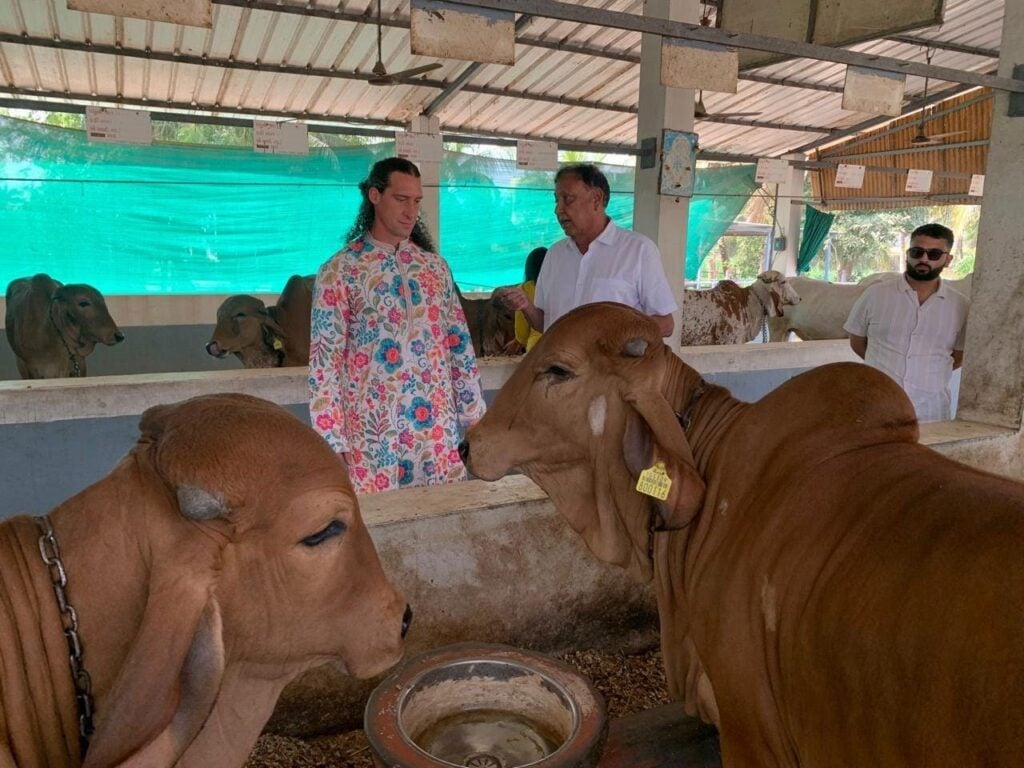
Trial Intention: Herd Acceptance of SGP+2.0™:
1. India / SUMUL Dairy (Successful 1st Round Trial)
a. Intention of trial was to determine herd acceptance.
- IFUS expected that when Sugarcane bagasse from India is formulated with Nutri-Mastic™, Carob, and Silage from Sugarcane tops, SGP+2.0™ will prove to be a superior product to SGP+™ made from bagasse in the U.S.
- This is supported by the 15-day trial on 2 Non-lactating Holstein-Friesian (HF) Crossbred Heifers (ages 4 and 3.5 years) at 940-lbs and 748-lbs, respectively.
- Results Exceeded Expectations as Improvements Clearly support lignin degradation and depolymerization with more than adequate CP (Crude Protein).
- Manure score improved after 2 weeks
- Where Milk fat percentage were the same, SNF
(Solid-non-fat) percent increased by a range of 0.60.8%,. This was particularly highlighted by the nutritionists and animal scientists at SUMUL.
- SNF typically ranges around 8%. A 0.60.8% increase = 7.5 to 10.0% increase in SNF.
- Lysine-effect can be found at IFUS Point 5a(4) in IFUS White Paper: Part 1 of 5: Plausible Scientific Evidence of the Efficacy of SGP+™ in Bovine Herd Performance through Bovine Ration Management: for production of lysine and other essential amino-acids from degraded/depolymerized lignin)
- SNF = The substances in milk other than water and butterfat left after the complete evaporation of water from milk.
- SNF in milk includes lactose, vitamins, calcium, minerals, fat, protein, and other nutrients. These contribute significantly to the nutritive value of milk.
- Hide shine improved after 10 days.
- Lysine-effect can be found at IFUS Point 5a(4) in IFUS White Paper: Part 1 of 5: Plausible Scientific Evidence of the Efficacy of SGP+™ in Bovine Herd Performance through Bovine Ration Management: for production of lysine and other essential amino-acids from degraded/depolymerized lignin)
- The surprising and encouraging results occurred with only a fraction of SGP+2.0™ being fed (15% of total ration) for only 15 days.
IFUS gained a new level of knowledge from the work performed at the SUMUL
Dairy. Furthermore, hard questions posed to IFUS by representatives from India’s National Dairy Board provided added fuel to an already burning fire to perform broader and deeper scientific exploration into the efficacy of SGP+™. This new information can be found in White Papers dedicated to SGP+™/SGP+2.0™ on the IFUS Website.
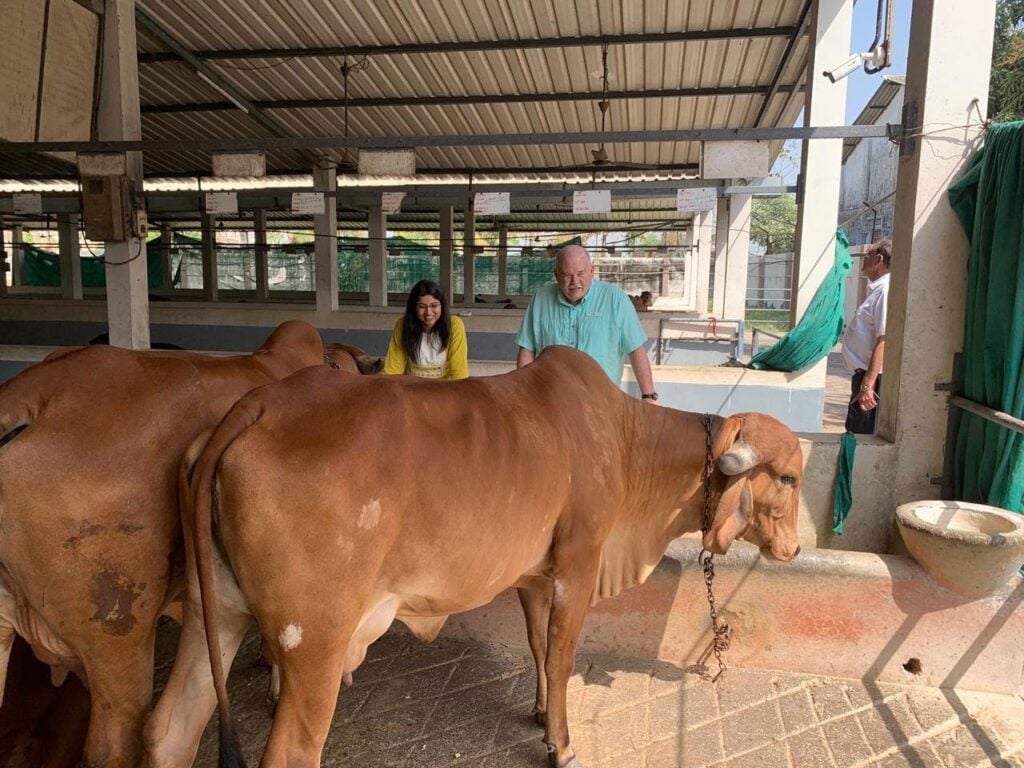
We have offered an additional picture of Marc Walther, CEO of Impact Fusion International as he observes the consumption of SGP+2.0™ by two of the heifers dedicated to the trial.
Of interest are studies like those found in the IFUS White Paper: Part 2: Plausible Scientific Evidence of the Efficacy of SGP+™ in Bovine Herd Performance through Bovine Ration Management
6.1.1.1 “4-Hydroxybenzoic acid supplementation in dairy cow diets may improve milk quality by modifying the fatty acid profile and increasing the bioavailability of polyphenolic compounds. Troubleshooting milk quality issues requires a whole farm approach, including nutrition and feed management, environmental cleanliness, milking parlor prep procedures and maintenance, genetics, and culling decisions.”
6.1.1.2 “Since the (poly)phenols are highly reactive, to overcome these problems, the formulation of a complex of polyphenolic compounds with natural biopolymers is an effective approach. Besides, to increase the bioavailability and bioaccessibility of polyphenolic compounds, milk proteins such as whey protein concentrate, sodium caseinate, and milk protein concentrate act as natural vehicles, due to their specific structural and functional properties with high nutritional value. Therefore, milk proteins are suitable for the delivery of polyphenols to parts of the gastrointestinal tract. Therefore, this review reports on types of (poly)phenols, methods for the analysis of binding interactions between (poly)phenols–milk proteins, and structural changes that occur during the interaction.” (1) Lignin would be one such natural biopolymer as would be other natural biopolymer-like compounds (e.g., waxes, ISP’s, etc.) found in Sugarcane Bagasse. Also, “Pistacia lentiscus, also known as Ash, contains natural polymers such as resin, which is a natural polymer found in the plant. The resin has been characterized and found to contain bioactive compounds like flavonoids and phenolics. It has been recognized for its antioxidant activity and potential use in food and cosmetic industries.” (2)
6.1.1.2.1 Ref.(1) Tosif MM, Najda A, Bains A, Krishna TC, Chawla P, Dyduch-Siemińska M, Klepacka
J, Kaushik R. A Comprehensive Review on the
Interaction of Milk Protein Concentrates with Plant-Based Polyphenolics. Int J Mol Sci. 2021 Dec 17;22(24):13548. doi:
10.3390/ijms222413548. PMID: 34948345; PMCID: PMC8709213.
6.1.1.2.2 Ref.(2) Vasiliki K. Pachi, Eleni V. Mikropoulou, Petros Gkiouvetidis,
Konstantinos Siafakas, Aikaterini
Argyropoulou, Apostolis Angelis, Sofia Mitakou, Maria Halabalaki,
IFUS holds that is has discovered a commercially viable process by which lignin from Sugarcane Bagasse begins to degrade and depolymerize in vitro prior to bovine consumption making Sugarcane Bagasse, when combined with Chios Mastic Gum, Carob, Ionic Minerals, and Water, a potential power supplement/food…one IFUS named SGP+™.
Furthermore, IFUS has found science in juried journals in support of the continuation of the degradation and depolymerization in vivo…that is within the rumen.
In a study performed by Yan, Q.; et. al, we find science that supports the efficacy of SGP+™: “Enhancing Agricultural Sustainability by Improving the Efficiency of Lignocellulosic Biomass Utilization in the Ruminant Diet via Solid-State Fermentation with White-Rot Fungi: A Review” (Microorganisms 2025, 13, 1708.
“Abstract
Against the backdrop of the green circular economy, the exploration of reliable and sustainable applications of lignocellulosic biomass (LCBM) has emerged as a critical research frontier. The utilization of LCBM as a ruminant roughage source offers a promising strategy to address two pressing issues: the “human-animal competition for food” dilemma and the environmental degradation resulting from improper LCBM disposal. However, the high degree of lignification in LCBM significantly restricts its utilization efficiency in ruminant diets. In recent years, microbial pretreatment has gained considerable attention as a viable approach to reduce lignification prior to LCBM application as ruminant feed. White-rot fungi (WRF) have emerged as particularly noteworthy among various microbial agents due to their environmentally benign characteristics and unique lignin degradation selectivity. WRF demonstrates remarkable efficacy in enzymatically breaking down the rigid lignocellulosic matrix (comprising lignin, cellulose, and hemicellulose) within LCBM cell walls, thereby reducing lignin content—a largely indigestible component for ruminants—while simultaneously enhancing the nutritional profile through increased protein availability and improved digestibility. Solid-state fermentation mediated by WRF enhances LCBM utilization rates and optimizes its nutritional value for ruminant consumption, thereby contributing to the advancement of sustainable livestock production, agroforestry systems, and global environmental conservation efforts. This review systematically examines recent technological advancements in WRF-mediated solid-state fermentation of LCBM, evaluates its outcomes of nutritional enhancement and animal utilization efficiency, and critically assesses current limitations and future prospects of this innovative approach within the framework of circular bioeconomy principles.
3. Pros and Cons of Utilizing LCBM in Ruminants
There are two reasons for ruminants to be connoisseurs of utilizing LCBM: special rumination/regurgitation mechanisms and the development of the rumen, a key digestive organ. The first is due to the process of rumination, which is simply the separation of large particles from small ones via density screening in the foregut, followed by the return of large particles to the mouth for further chewing and re-entry into the intestine [19]. This process increases the surface area of the chyme through repeated chewing and promotes its degradation in the rumen. Another vital reason is possessing a unique organ, the rumen, which has evolved to adapt to the survival environment. The rumen is inhabited by microbiota such as bacteria, fungi, and protozoa, which help ruminants degrade LCBM via degradation mechanisms such as enzymolysis (primarily involving cellulases and xylanases) [20,21]. Overall, ruminant rumination behavior and the function of the rumen in processing LCBM constitute a complex process that will not be discussed here. Figure 2A summarizes some research information on the nutritional value of LCBM versus alfalfa hay and oat hay (high-quality forage for ruminants). It is easy to see that the crude protein (CP) content of alfalfa hay (18.46%/DM) was much higher than that of LCBM, and the acid detergent lignin (ADL) content (6.44%/DM) was lower than that of LCBM.
This indicates that the available nutritive value of alfalfa hay is higher than that of
LCBM. Similarly, oat hay demonstrated higher available nutrient values than LCBM. Cell wall components, namely neutral detergent fiber (NDF), acid detergent fiber (ADF), and ADL, were much higher in LCBM than in alfalfa hay versus oat hay. This affected the availability and degradability of LCBM to microorganisms in rumen [22]. Lignin, a cell wall component, cannot be degraded under anaerobic conditions in the rumen and is an unavailable non-nutrient for ruminants. Secondly, lignin forms a tightly linked structure encapsulating cellulose and hemicellulose, hindering the accessibility of hydrolytic enzymes secreted by rumen microorganisms [7].”
Further content on the aforementioned study is underway and is being placed into the IFUS White Paper: Part 1 of 5: Plausible Scientific Evidence of the Efficacy of SGP+™ in Bovine Herd Performance through Bovine Ration Management
Lignin, Degraded and Depolymerized Lignin, and Select Synergies from Mastic, Ionic Minerals, and Carob Rev.8-16Jul2025-ifus). We will provide an update to you when this Rev. 8 is complete.
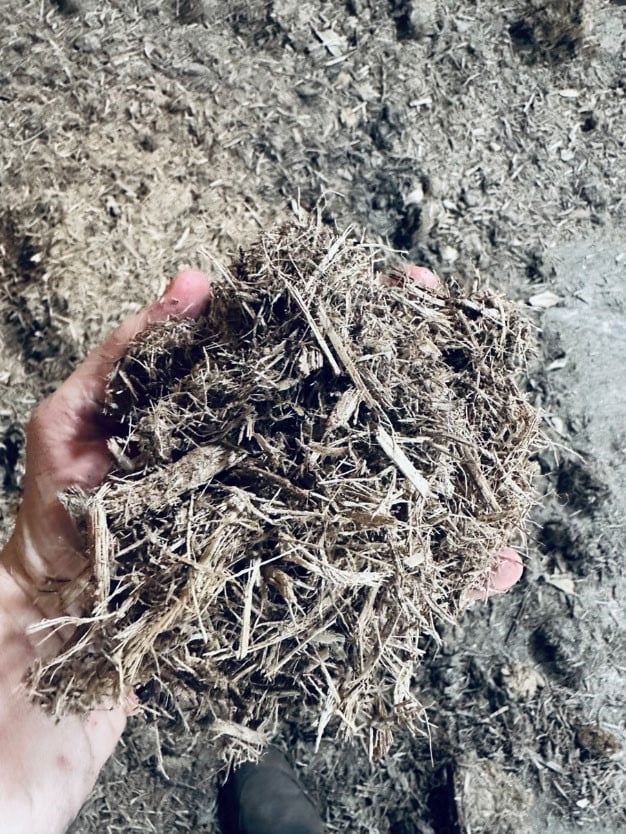
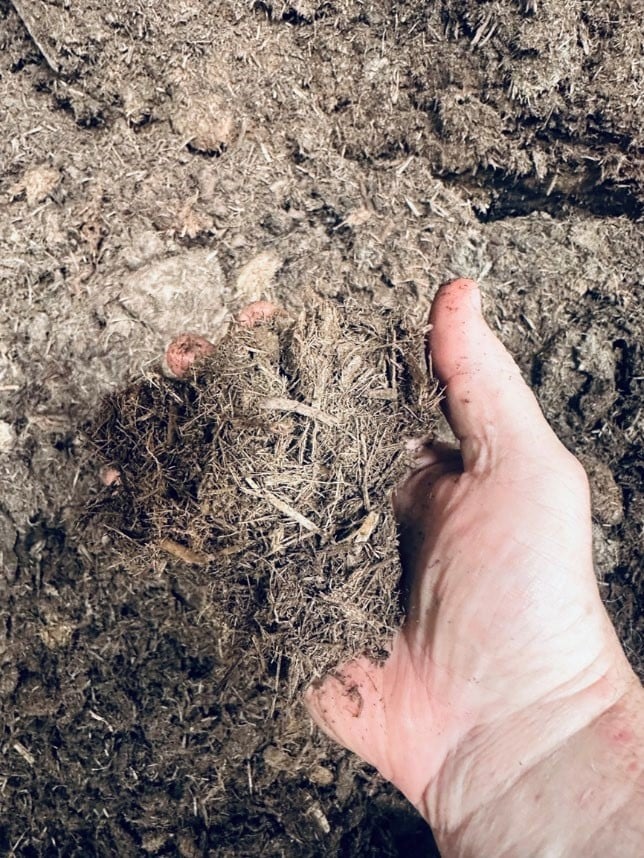
Please note that when Sugarcane Bagasse is formulated into SGP+™, the IFUS Proprietary Formulation Process is designed to initiate lignin degradation by mechanical force such that the bagasse fiber itself is visually fractured. (See Picture A. Sugarcane Bagasse vs Picture B. SGP+™)
Picture A: Sugarcane Bagasse
Picture B: SGP+™
Additionally, the phytochemicals and ionic minerals contained in the ingredients added to SGP+™ coupled with the natural degradation and depolymerization of lignin by White Rot Fungi (as well as the natural microbial biome) of Sugarcane Bagasse, are believed to contribute to the realization of the “Holy Grail” of energy and nutrition required by heifers, steers, and calves.
White Papers found under the “Knowledge Base” tab on the IFUS website dedicated to SGP+™ offer plausible scientific evidence in support of this contention.
For example:
1. Manure Scoring
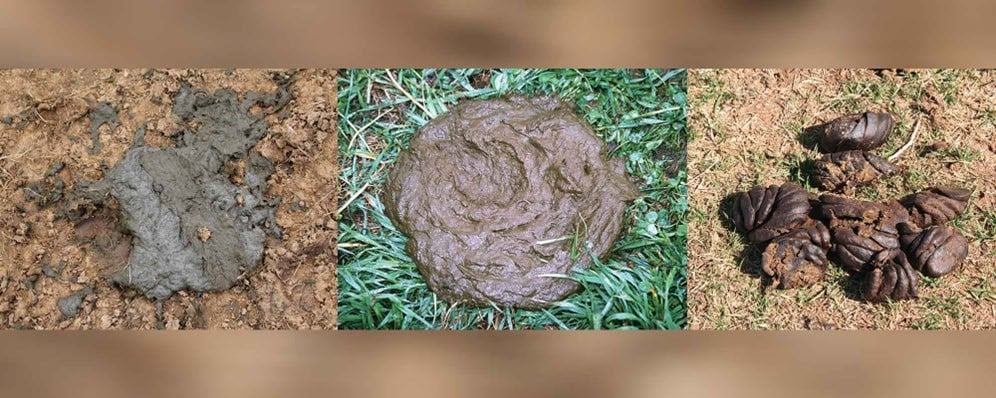
Source: Nobel Research Institute
“Score 3: 12-15% CP; 62-70% TDN of diet. Manure score 3 is ideal and will typically start to take on a normal pat form. The consistency will be similar to thick pancake batter. It will exhibit a slight divot in the middle. The pat will be deeper than a score 2 pat, but will not stack. This diet is not lacking nutritionally, yet is not in excess for the cow and her physiological stage.”

In comparing to the pictures above, the pictures below illustrate the transformation of Manure Pats at the SUMUL Dairy after 15-days with SGP+2.0™ applied as 15% of Total Ration:
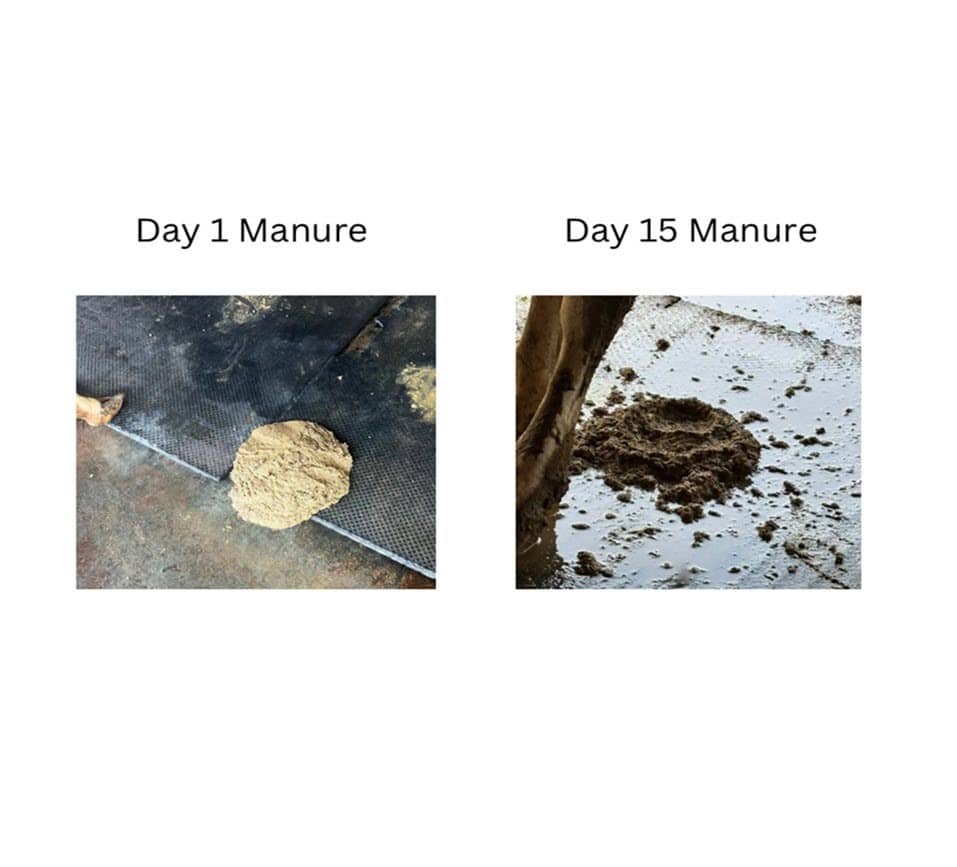
- I.V.T.D. Analysis
IFUS Point 4d: Testing performed by the L.S.U. Southeast Research Station Forage Quality Lab demonstrated a marked I.V.T.D. improvement of SGP+™ as compared to Sugarcane bagasse (47.5% vs 32.0%, respectively). Where by this analysis alone SGP+ should NOT produce the Herd Performance claimed by ranchers and dairymen, per Dr. Mike McCormick, is does beg the question as to what caused this significant improvement in I.V.T.D.
- L.S.U. Southeast Research Station Forage Quality Lab Cumberland Valley Analytical Services
- A series of Forage analyses performed by L.S.U. Southeast Research Station Forage Quality Lab showed Sugarcane Bagasse used in the formulation of SGP+™ to contain roughly 28% lignin.
- However, the lignin concentration decreased to 19% in an 85% SGP+™/15% Cracked Corn ration mix (as analyzed by Cumberland Valley Analytical Services).
- Furthermore, in Manure Analysis performed on Score 3 Manure Pats resulting from the 85/15 mix, showed a further decrease in lignin content to 7-9% (as analyzed by Cumberland Valley Analytical Services).
- Humic Substance
IFUS Point 2c(1): Furthermore, another study concluded that, “…the addition of HS to the diet of beef heifers resulted in a favorable increase in the retention of N, with increased NH3-N and protozoa counts at low to moderate doses of HS. HS favorably increased the digestibility of CP and the retention of N, and decreased fecal N excretion. The addition of HS to the diet had no effect on CH4 production and the microbiome was altered in a manner that was consistent with the lack of change in CH4 production. Further study should assess the effects of HS additive on growth performance in feedlot cattle.” Effect of humic substances on rumen fermentation, nutrient digestibility, methane emissions, and rumen microbiota in beef heifers, Stephanie A Terry, et.al., J Anim Sci. 2018 Aug 29;96(9):3863–3877. doi: 10.1093/jas/sky265.
- Crude Protein from lignin
IFUS Point 5a: CRUDE PROTEIN FROM LIGNIN: “The fungus Pleurotus ostreatus NRRL-2366 degraded 56.7% and 45.9% of untreated and chemically pretreated (delignified) sugarcane bagasse, respectively, during 14-day incubation in a submerged fermentation process. The biodegradation percentages of cellulose, hemicellulose and lignin were 33.0%, 72.5% and 14.5%, respectively. An increment of 22.6% of crude protein content in the residual fermented material was observed. Chemical composition of the end-product and its amino acids profile were reported.” “Bioconversion of sugarcane bagasse into a protein-rich product by white rot fungus”, Samir A. El-Sayed, et.al., Resources, Conservation and Recycling, Volume 12, Issues 3–4, November 1994, Pages 195-200 (https://doi.org/10.1016/0921-3449(94)90007-8).
IFUS Point5a(3): Furthermore, where does the protein come from? An answer has been provided by a recent breakthrough whereby Proteinogenic Amino Acids are produced in the presence of minerals from lignin depolymerization. Source: “Intracellular pathways for lignin catabolism in white-rot fungi”, Carlos del Cerro,
et.al, The Proceedings of the National Academy of Sciences: Systems Biology/Biological Sciences, Feb. 23, 2021.
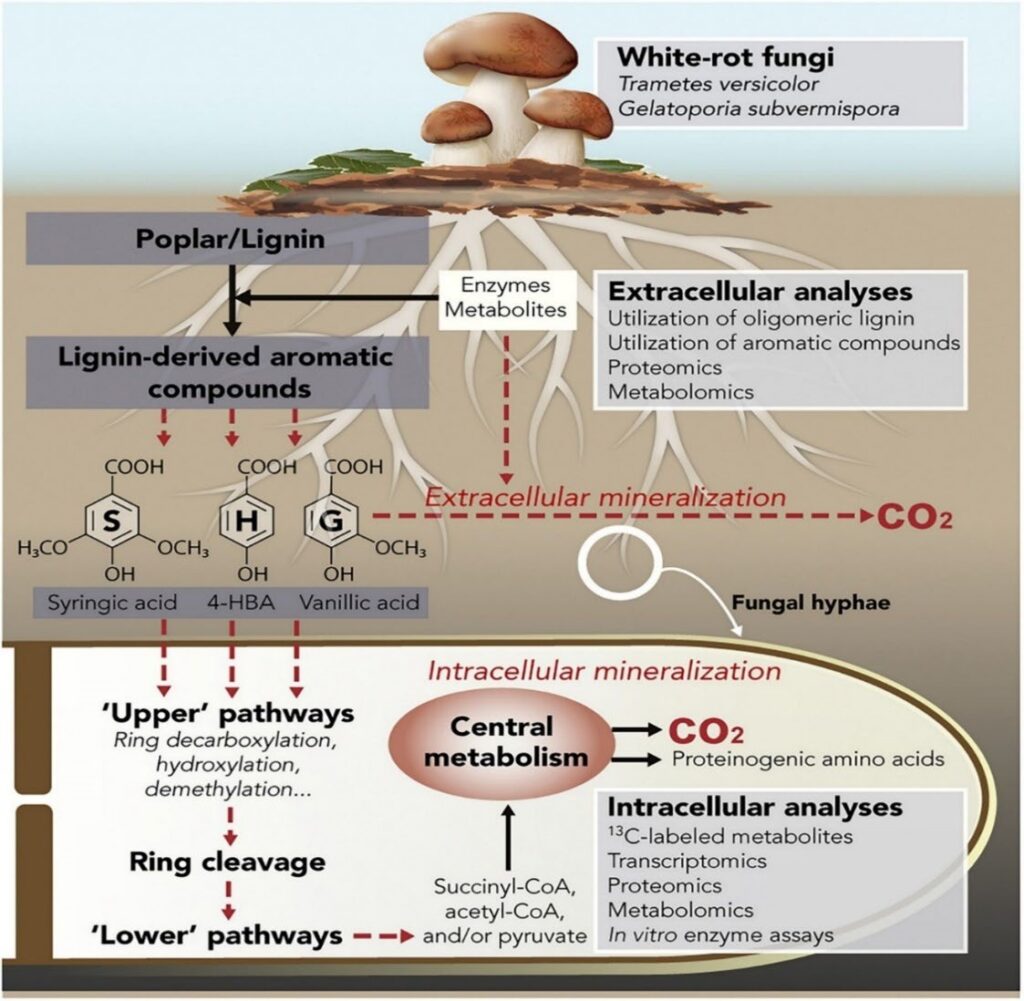
IFUS Point 5a(4): Among the Amino Acids produced, Lysine and several other amino acids critical to bovine colostrum/milk production are produced. (See: “Amino Acid Production from Lignin by White Rot Fungus Fig. 2”) https://www.pnas.org/doi/10.1073/pnas.2017381118#fig02, “Intracellular pathways for lignin catabolism in white-rot fungi”, Carlos del Cerro, Erika Erickson, Tao Dong, Davinia Salvachúa, et.al, The Proceedings of the National Academy of Sciences: Systems Biology/Biological Sciences, Feb. 23, 2021.
Fig. 2 below reinforces this science:
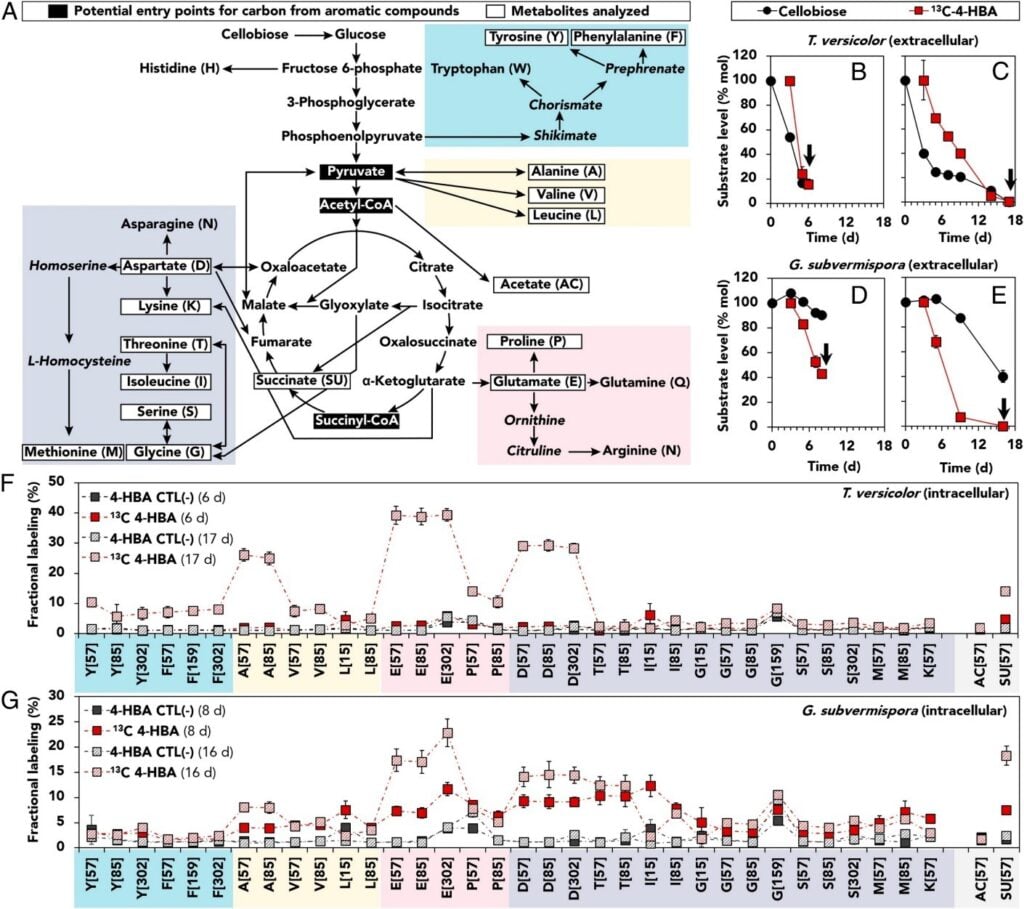
C-labeling experiments demonstrate carbon flux of lignin-derived compounds to central metabolism. (A) Abbreviated map showing central carbon metabolic pathways and amino acid biosynthesis in WRF based on the current KEGG model for T. versicolor. (B–E) Substrate level (molar percent) of extracellular metabolites (cellobiose and 4-HBA) in (B) 6-d and (C) 17-d T. versicolor cultivations and (D) 8-d and (E) 16-d G. subvermispora cultivations. A value of 100% corresponds to the initial concentration (7.5 mM in all cases, excluding cellobiose concentration in the 17-d T. versicolor cultivations, which was 3.75 mM). Arrows indicate the sample collection time for 13C intracellular analysis. (F–G) Fractional labeling in detected proteinogenic amino acid fragments and other metabolites (acetate and succinate) in (F) T. versicolor and (G) G. subvermispora cultivations when providing unlabeled 4-HBA [negative control, CTL(-)] and 13C-ring–labeled 4HBA. Amino acids fragments (i.e., [15], [57], [85], [159], and [302]) are the result of the derivatization and analysis as thoroughly detailed by Nalsen et al. (33).
Individual points are connected with discontinuous lines to facilitate visualization.
All results are the average of biological triplicates, and error bars represent the SD. Statistical significance (t test) is presented in SI Appendix.
- Milk Production:
“Lignin enhances the degradation of 17β-estradiol (E2) in bovine milk production. E2 has been shown to decrease milk production in dairy cows during gestation. The presence of 17β-oestradiol, estrone, and estriol-sulphate in human breast cyst fluid has also been demonstrated.” “The role of lignin in 17β-estradiol biodegradation: insights from cellular characteristics and lipidomics,” Hanyu Pan, et.al., Microb Cell Fact 23, 347 (2024). https://doi.org/10.1186/s12934-024-026059
- Methane Suppression with H20 production, while buffering acidic conditions in rumen by CO2.
IFUS Point 5e(1): “Lignin degradation and depolymerization from White Rot Fungi biochemically shown to produce water. H2 necessary for the production of CH4 in protein metabolism, is converted in water.” “Methane production through anaerobic digestion: Participation and digestion characteristics of cellulose, hemicellulose and lignin,” Wanwu Li, Habiba Khalid, Zhe Zhu, Ruihong Zhang, Guangqing Liu, Chang Chen, Eva Thorin, “Applied Energy,” Volume 226, 15 September 2018, Pages 1219-1228.
IFUS Point 5f(1): Gallic Acid is produced in lignin degradation and is an active ingredient in Chios Mastic Gum and Carob. Michele Manoni, et.al. in Animal Feed Science and Technology, Volume 305, November 2023, 115791, demonstrate the “Effect of ellagic and gallic acid on the mitigation of methane production and ammonia formation in an in vitro model of short-term rumen fermentation, Animal Feed Science and Technology, Volume 305, November 2023, 115791.”
IFUS Point 5f(1a) “Highlights:
- Ellagic and gallic acid were assessed in an in vitro model of rumen fermentation.
- Ellagic and gallic acid decreased methane emissions and ammonia formation.
- Ellagic and gallic acid modulated the rumen microbial community.” • See Graphical Abstract below:
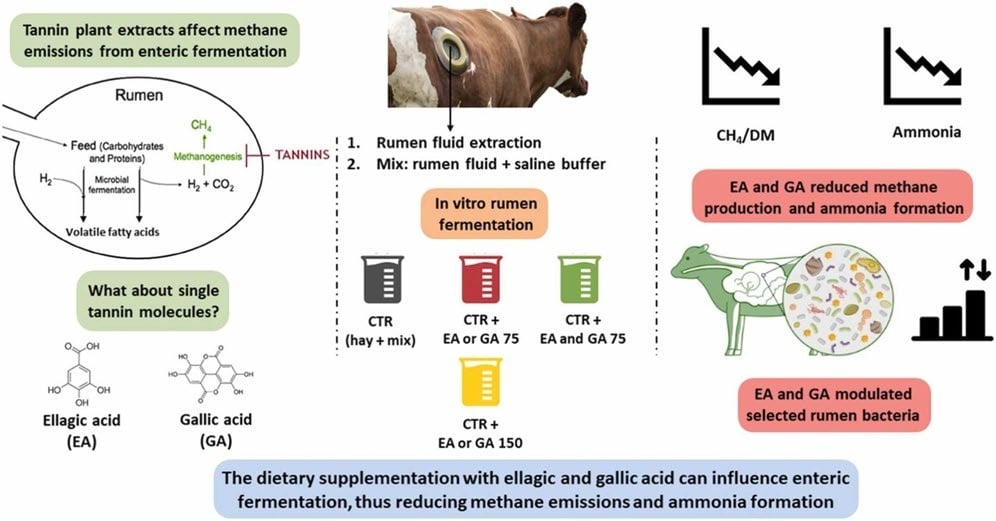
IFUS Point 5f(1b): From the information above, one could plausibly extrapolate that Ellagic Acid produced from microbial activity in Sugarcane Bagasse balances the Gallic Acid from SGP+™. The Ellagic
Acid enhances bovine digestion and subsequent absorption, while the Gallic Acid suppresses methane, especially if the in vitro degradation and depolymerization of lignin continues in vivoin the Upper GI of the bovine (where the lignin degradation allows free H+ to be converted into water rather than CH4). (See IFUS Point 5f(2)). (Also, a Part 2 White Paper is under construction, which further explores the effects of Mastic
Gum and Carob on Bovine Herd Performance, to include Greenhouse Gas sequestration.)
- Natural Estrogen Production (Phytohormones)
IFUS Point 5b(3): “Degraded lignin can be supportive for natural phytoestrogens in bovines (1)(2)(3)(4)(5). In nature, lignin can be degraded by microorganisms and their secreted enzymes into building blocks that can potentially be converted into high-value chemicals (1). Microbial degradation of lignin by fungi, important lignin degraders in nature, has been intensively studied.”
See IFUS White Paper for 5 references that support this (Part 1 of 5: Plausible Scientific Evidence of the Efficacy of SGP+™ in Bovine Herd Performance through Bovine Ration Management)
In this update, we could offer page after page of studies like those offered above. However, we do so in the White Papers, which are considered a part of our everevolving Knowledge Base. We receive reports from ranchers and dairymen applying SGP+™ as to improvements to their respective herds. We then task our IFUS Scientific Team to find plausible explanations that either support or refute the claims. Our goal is scientific truth based on fact and reasoning.
We admit that any singular study could be dismissed as an outlier and/or offer limited support as to the plausibility of SGP+™ actually producing the following synergies:
- Reduced Greenhouse Gases/Carbon Footprint.
- Higher Quality/Quantity Meat, Milk, and Colostrum.
- Reduced Infant Mortality and Miscarriages with Higher Quality Calves.
- Reduced Antibiotic Application/Improved Herd Health.
- Reduced Costs, Higher Revenues, and Higher Profits.
- Reduced Fly/Insect Infestations.
- Improved Manure Quality for Natural Replenishment of Top Soil.
- Improved Heat Tolerance.
However, when study after study after study offers plausible explanations in support of the Herd Performance reported to IFUS by ranchers and dairymen applying SGP+™ as both a product and technology within their respective Ration Management Strategy, then the Inputs and Outputs seemingly begin to align.
Hence, IFUS contends that based upon the science, the data, the herd performance, and more, SGP+™ may in fact be a product and technology that provides integrated solutions to the beef and dairy industries in an eco-friendly, costeffective, and sustainable manner.
And, based on a sound Ration Management Strategy, SGP+™ is being reported to:
- Lower costs.
- Improve herd performance/quality.
- Increase revenues/profits.
- Reduce Carbon-Footprint.
And where no two herds are identical, pragmatic intelligence (like that applied in the Trials performed to date), will be required to realize successful application of SGP+™ as not a simple grass-for-grass for replacement, but a technology supported by a product that was discovered such that Mother Nature is allowed to correct the problems created by humankind.
“We continue to offer plausible science that explains or refutes the claims being made to us by ranchers and dairymen applying SGP+™ / SGP+2.0™ as part of their respective Ration Management Strategies. As we’ve stated, irrespective of the science, there is seemingly nothing more powerful for these operations than Herd Performance and Economic Gains…both of which are reported to us. We strive to offer scientifically derived substantive evidence as to the efficacy of SGP+™, to include anything that would create a concern or issue. To date we have found no evidence that the ingredients used in formulating SGP+™ or the SGP+™ formulation provides anything but beneficial outcomes for the herds, when used as part of a Ration Management Strategy. As always, we encourage responsible application of SGP™ from the initial introduction up to and through the steadystate application as both product and technology in Bovine Herd Performance Management,” said Marc Walther, CEO of Impact Fusion International.
Once more, we are “Back to work!”
You must be logged in to post a comment.