









 My Account

LETTER TO THE SHAREHOLDERS
March 24, 2026
Napoleonville, LA IFUS:OTCID
Deer Run Ranch in Jefferson, TX as well as Walkabout Ranch in Anthony, KS both report a reduction of hydration requirements of their respective beef herds.
The owner of Walkabout Ranch states:
- “SGP+™ pays you back ~ 2.25 times the cost of feeding it! Based on the steers we slaughter for personal consumption, SGP+™ produces more pounds of total beef quicker, allowing less time on feed at the feedlot…and creates a faster farm to table realization. Also, the meat produced birth to plate will make U.S.D.A. Prime Beef extremely desirable in the export market.”
The rancher adds in additional e-mails to IFUS: “So, I took the price of a steer and a heifer at those weights and averaged them. Hence, 1/2 male/ 1/2 female.
- All figures are conservative. Mineral fly protection for some will be much higher.
- But for argument… Assuming that all herds are kept on grass year-round. The SGP+™ ration is 2.5# SGP+™ and 2.5# alfalfa. Gets cost in our location to $0.40 / day.”
This rancher (along with others) is suggesting that the hydration requirements for the cattle herds is being reduced around 30%.”
- Additionally, this rancher has provided additional information whereby he writes: “SGP+™ reduces drought impact on pastures, reduces grass intake by 25%, decreases the need for grass fertilizers, and reduces animal water intake.”
He has also provided data in earlier communications as to the specific impact of reduced water requirements on the ability of farmers to have added water.
- “If every feedlot (cattle on feed report #) were feeding SGP+™, the amount of water saved would offset the amount of water needed to produce the pounds of
| corn used for the total amount of cattle by almost 79%. 12 million gallons a day | |
| equal 70 circles of corn at 125 acres per circle and 200 bushel per acre.” | |
SGP+™ is not just an add-on product, but part of an “Outcome-based Ration
Management Strategy” applied with pragmatic discipline…one based on a Natural
Phytochemical Enhanced Bovine Ration (NPEBR™) and Herd Management Best Practices so as to achieve eco-friendly, cost-effective, and sustainable Herd Performance.
We find scientific evidence of the production of water from the degradation and depolymerization of lignin. As a reminder, Sugarcane Bagasse contains 60% Slignin, plus Mn and Fe critical to heme production. (See Diagrams Below):
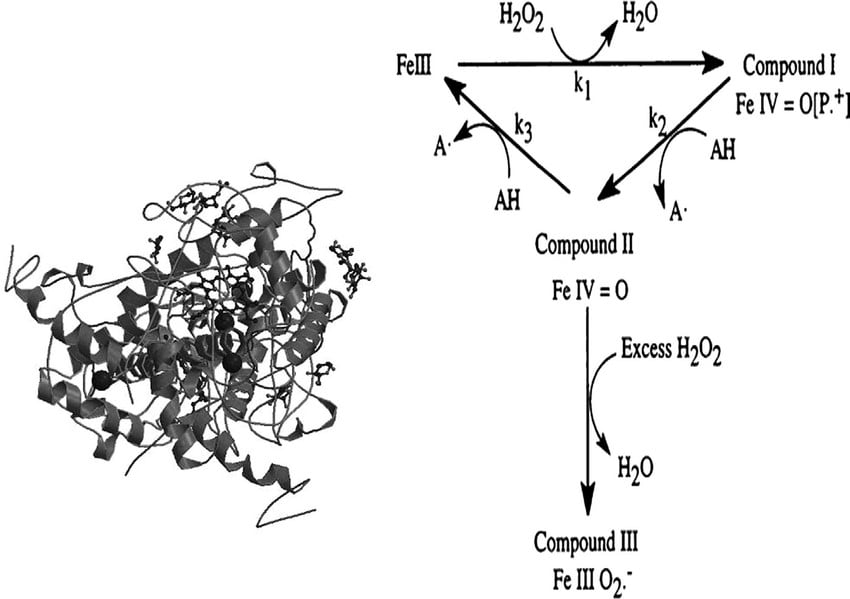
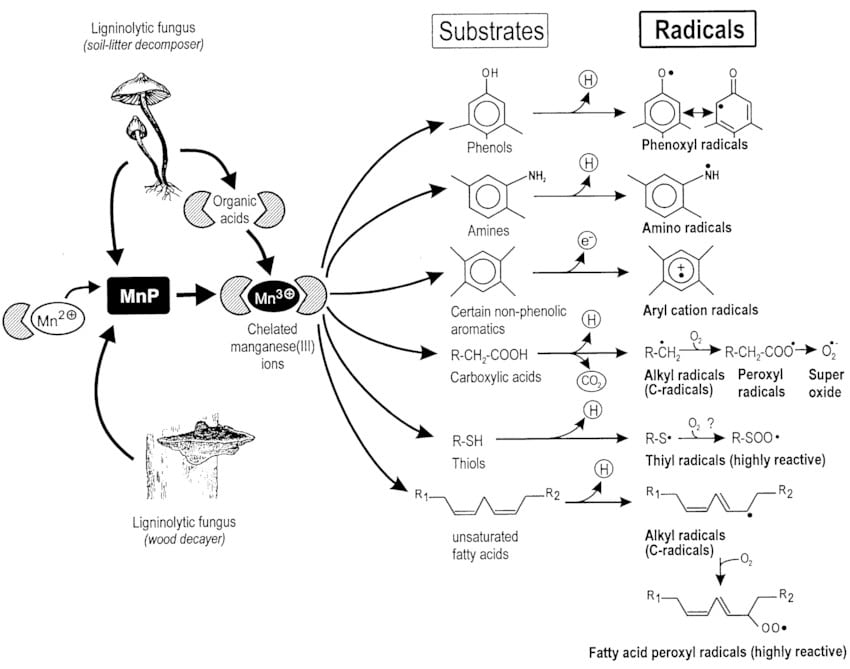
Source 1: “The O-demethylation of lignin aromatics is a rate-limiting step in their bioconversion to higher-value compounds. A recently discovered cytochrome P450, SyoA, demethylates the S-lignin aromatic syringol.” (Harlington, A.C., et al., Structural insights into S-lignin O-demethylation via a rare class of heme peroxygenase enzymes. Nat Commun 16, 1815(2025).
https://doi.org/10.1038/s41467-025-57129-6
Source 2: “Metabolic mechanism of lignin-derived aromatics in white-rot fungi,” Hiroyuki Kato, et.al., Appl Microbiol Biotechnol. 2024 Dec 11;108(1):532. doi:
10.1007/s00253-024-13371-4.
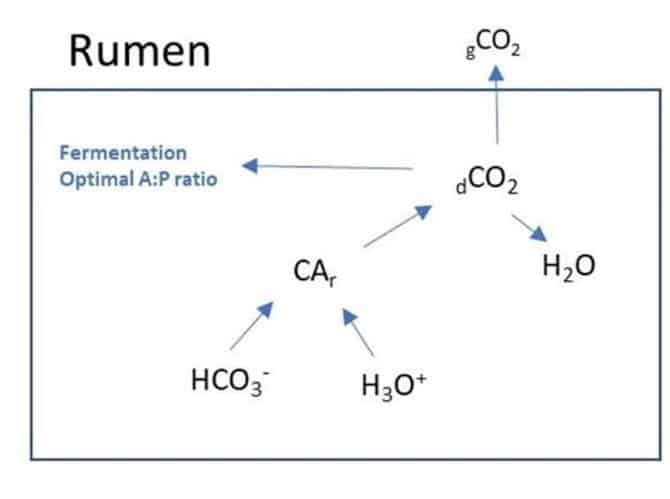
Source 3: “Ruminal CO2 Holdup: A New Perspective on Rumen Function,” Dr.
José A. Laporte Uribe, DVM, PhD Animal Science, Native Microbials, Jun 13, 2024. (See Figure 1)
Figure 1. The ruminal buffering system: Protons (H3O+) are neutralized in the rumen by bicarbonate (HCO3-). This reaction is facilitated by ruminal carbonic anhydrase (enzyme). The process results in the formation of dissolved carbon dioxide (dCO2). As water (H2O) is releasedand CO2 gas escapes to the gas cap, the system’s buffering capacity is maintained. Remarkably, ruminal dCO2 is the key component and its concentrations in the fluid promote optimal fermentation. This principle is similar to the fizz you see in carbonated beverages like beer or soda.
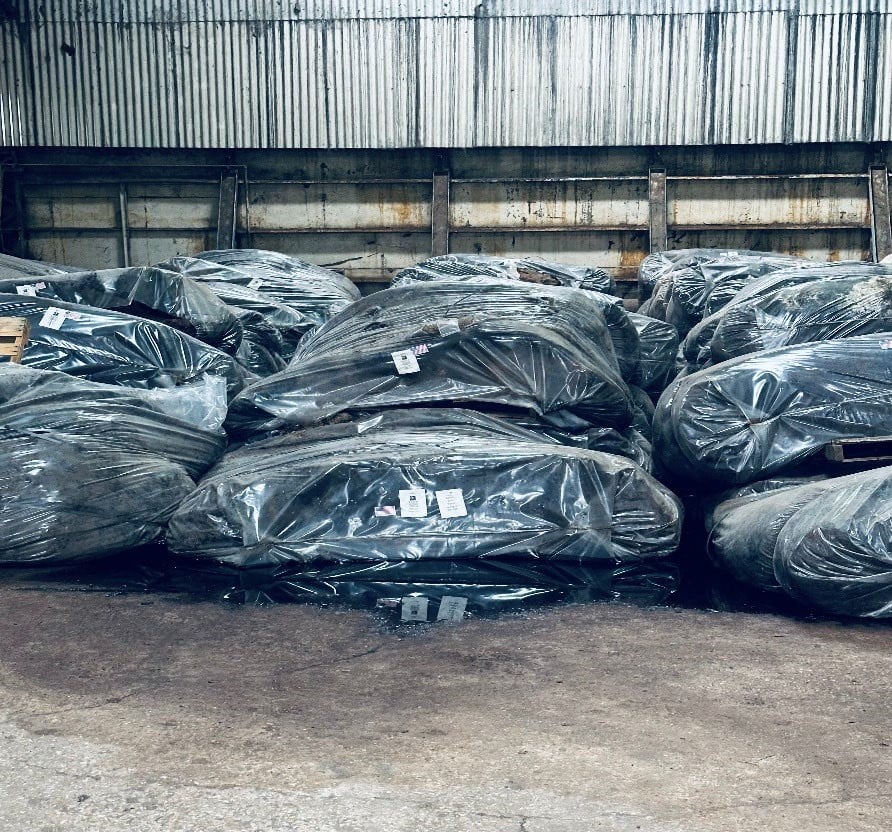
This science is practically observed from documentation of degrading SGP+™ bales in the IFUS Warehouse in Napoleonville, LA.
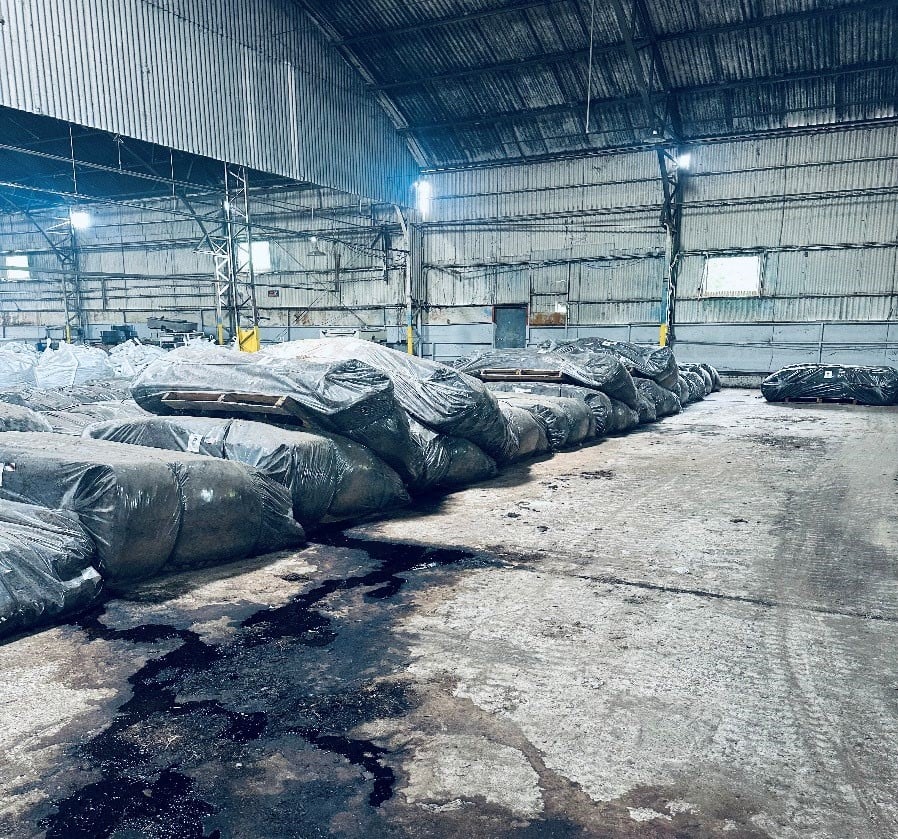
“Under anaerobic conditions, major bacterial decomposition occurs, leading to the formation of black or dark grey colored wastewater [30],” Abdoul Wahab
Nouhou Moussa, et.al., “Critical State of the Art of Sugarcane Industry
Wastewater Treatment Technologies and Perspectives for Sustainability,”
Membranes (Basel). 2023 Jul 31;13(8):709. doi: 10.3390/membranes13080709
Normally, this black-water from Sugarcane Bagasse results from pile maceration to prevent spontaneous combustion. This effluent would be filled with Iron Sulfides with a characteristic Sulfide smell. Where the dark color is attributed to Iron, there is NO Sulfide smell in the IFUS facility from the black-water as well as NO water added to prevent combustion as the bales are cool. Yet, water is being produced from what is believed to be the degradation and subsequent depolymerization of lignin found in the Sugarcane Bagasse formulated into SGP+™ with Nutri-Mastic™.
“A taxonomic classification of the bagasse metagenome reviews the predominance of Proteobacteria, which are also found in high abundance in other aerobic environments. Based on the functional characterization of biomass-degrading enzymes, we have demonstrated that the bagasse microbial community benefits from a large repertoire of lignocellulolytic enzymes, which allows them to digest different components of lignocelluoses into single molecule sugars.” Wuttichai Mhuantong, et.al., “Comparative analysis of sugarcane bagasse metagenome reveals unique and conserved biomassdegrading enzymes among lignocellulolytic microbial communities,” Biotechnol Biofuels. 2015 Feb 8;8:16. doi: 10.1186/s13068-015-0200-8 “Considering nation-wide reports of present drought conditions, as well as science that is suggesting this situation to worsen, finding cost-effective, eco-friendly, and sustainable solutions to mitigate the effects is challenging…yet one that Impact Fusion believes it can mitigate in a positive fashion. Reports from active ranching operations like that of Deer Run Ranch and Walkabout Ranch offers to us observations and data. This information is then provided to our IFUS Scientific Team so that they can find plausible science that either supports the information provided to us by these ranchers or refute it. Whatever the case, we report and provide scientific guidance supported by a review of scientific literature published in juried journals. As always, this information is then placed in our ever-expanding ‘Knowledge Base’, which can be found on the Impact Fusion International website. Successful application of our IFUS Product lines is our goal, such that we expand our IMPACT on our stakeholders in a positive manner…for soil, plant, animal, and human health through safe, cost-effective, and eco-friendly supplementation. This remains our most fundamental outcome. And, in doing so, we believe that you, our shareholders, will benefit,” said Marc Walther, CEO of Impact Fusion International.
Once more, we are “Back to work!”
You must be logged in to post a comment.