









 My Account
LETTER TO THE SHAREHOLDERS
November 17, 2025
Napoleonville, LA IFUS:OTCID
Again, we begin with the quote from Dr. Robert E. Pettit, Emeritus Associate
Professor Texas A&M University, who published a treatise: “ORGANIC
MATTER, HUMUS, HUMATE, HUMIC ACID, FULVIC ACID AND HUMIN:
THEIR IMPORTANCE IN SOIL FERTILITY AND PLANT HEALTH.”
As a reminder, Dr. Pettit stated, “Continued use of these acidic fertilizers in the absence of adequate humic substances (in the soil) has caused many serious sociological and ecological problems. Man needs to reconsider his approach to fertilization techniques by giving higher priority to soil humus.”
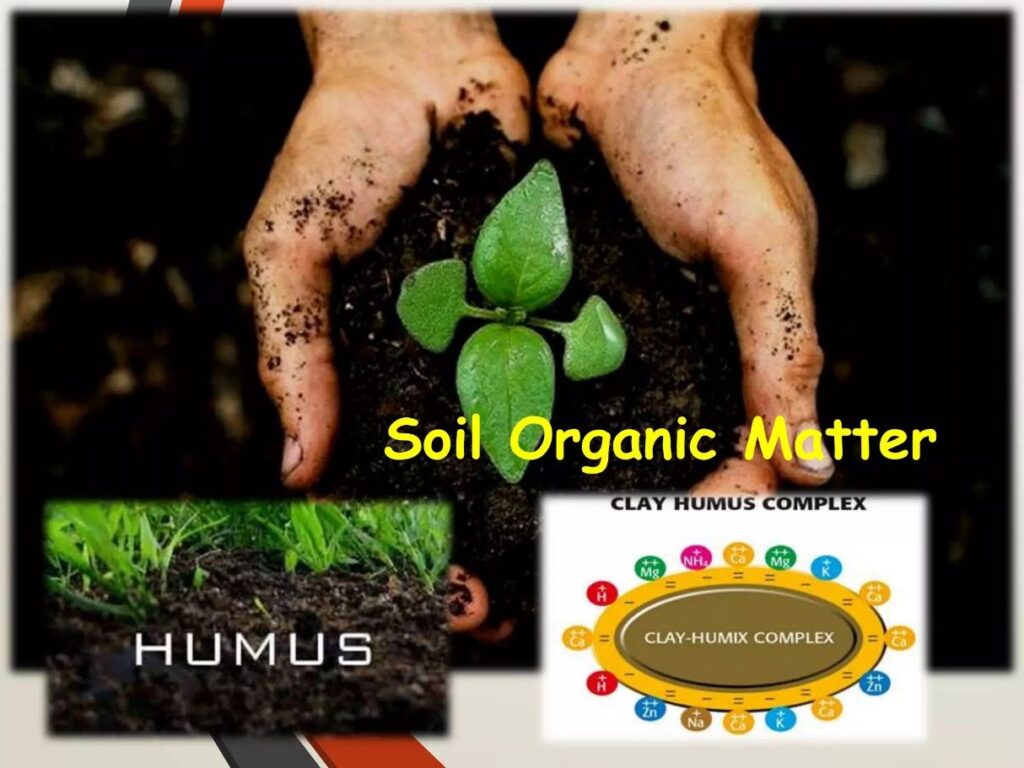
Source: https://image.slidesharecdn.com/soilorganicmatter181129065629/75/Soilorganic-matter-and-Humic-substances-1-2048.jpg We have challenged our IFUS Scientific Team to find practical guidance for the application of SupremeAG™ to respective plants, trees, and shrubs. This guidance is to be based on Best Gardening Practices and Qualitative Testing and
Observations…both the successes and failures in the application of our product as the technological breakthrough we believe it to be.
Hence, we start with a deeper dive into Humic Substances.
As shown in Diagram 1 below, Humic Substances are considered to be made of three major chemicals: (1) Fulvic Acid, (2) Humic Acid, and (3) Humin.
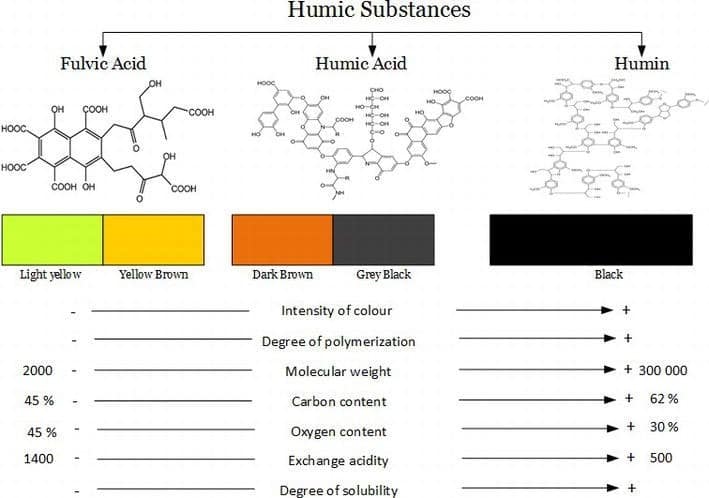
Source: Humic Substances: Its Toxicology, Chemistry and Biology Associated with Soil, Plants and Environment, Rajneesh Kumar Gautam, Dimuth Navaratna, Shobha Muthukumaran, Amarendra Singh, Islamuddin and Nandkishor More
Submitted: 19 November 2020 Reviewed: 21 May 2021 Published: 07 June 2021 DOI: 10.5772/intechopen.98518
We find invaluable information in a study published by “Sutradhar S, Fatehi P. Latest development in the fabrication and use of lignin-derived humic acid.
Biotechnol Biofuels Bioprod. 2023 Mar 7;16(1):38. doi: 10.1186/s13068-02302278-3. PMID: 36882875; PMCID: PMC9989592.”
Where significant research is being expended in synthetically lignin-derived Humic Substance, IFUS holds the we have discovered how to naturally expedite the formation of Humic Substance in our SupremeAG™ Product Line. This technology is realized through our IFUS Proprietary Formulation and Processing Methods. Furthermore, we hold that we do so in an eco-friendly and cost-effective manner, that when applied with Best Gardening Practices produces healthier plants with subsequent improved bloom, fruit, nut, vegetable yield and quality through supporting plant health and well-being.
Our IFUS Proprietary process utilizes all-natural ingredients to include: Nutri-
Mastic™, Carob, and Sugarcane Bagasse. As a reminder, Sugarcane Bagasse is typically considered unusable for most applications due to the “recalcitrant” nature of the lignin. In Louisiana, lignin is found at a level of roughly 28% of the total bagasse.
Based on qualitative observations and limited quantitative analysis, IFUS holds that SupremeAG™ is an eco-friendly and cost-effective product, by which the “Holy Grail” of energy and nutrition for both plants and animals can be unlocked. The supporting plausible science that supports this contention can be found in a White Paper on the IFUS Website at https://www.impactfusionbrands.com/knowledge-base/part-1-plausible-scientificevidence-of-the-efficacy-of-sgptm-in-bovine-herd-performance-through-rationmanagement/.
Hence, we once more focus our attention to the lignin contained in Sugarcane Bagasse.
An article published Dr. Sutradhar and his team informs us of the:
“Origin of humic substances: historical review:
Humic substances were first defined in 1761 by Wallerius as a decomposed organic matter [62]. In 1786, Achard extracted a brown substance from soil and peat using a KOH solution and named it humic acid [63, 64]. Humus, a Latin word suggesting a soil-like substance, was first introduced by de Saussure in 1804, referring to dark soil organic matter [62]. In 1837, Sprengel developed several methods for preparing humic acid by pretreating soil with dilute mineral acids before alkaline extraction [62]. Sven Oden (1919) postulated that HS are the light to dark-brown substances of unknown materials, which are formed in nature by the decomposition of organic matter through the actions of microorganisms or in a laboratory by oxidizing chemical reagents. Alternatively, it was suggested that humus is the product of the condensation reaction between carbohydrates and amino acids in a microorganism-free environment [65]. It was also stated that phenol, quinone, and hydroquinone oxidation in an alkaline solution yields compounds similar to humic acids [66].”
He and his team further share insight into what is known as THE LIGNIN
THEORY:
“In 1936, Waksman proposed the ‘Lignin-protein theory’ and stated that HS could be generated from the microbial attack of lignin [64]. According to this theory, the incomplete microbial attack of lignin molecules fragments lignin into smaller units and residues, which become part of the soil humus. In the degradation process, the methoxyl groups of lignin decompose into o-hydroxy phenols, and the oxidation of the aliphatic side chain converts into carboxylic acid groups. Moreover, Waksman reported that the presence of nitrogen compounds in the HS might result from the condensation of lignin with the microbial protein and other nitrogenous compounds. However, the final transformation of modified lignin residues to humic acids followed by fulvic acids was unclear in theory. Although the concept of Waksman’s theory is controversial to many researchers, scientists agree with the theory that HS originate from plant residues and lignin-based materials. In 1982, Stevenson proposed the polyphenol theory of HS generation, as presented in Fig. 1. According to this theory, lignocellulosic biomass decomposes into lignin, cellulose and other non-lignin compounds (tannins, flavonoids, carotenoids, etc.). The lignin is fragmented into phenolic aldehydes and acids by the action of soil microorganisms. Some parts of these phenolic compounds (mainly phenolic acids) may oxidize to carbon dioxide by different enzymes. Later, these phenolic and non-lignin compounds are attacked by soil microorganisms and transformed into polyphenols. By enzymatic oxidation, the polyphenols convert to quinones. Finally, condensation occurs between animal protein amino compounds/acids in the soil and the quinones to transform into the natural HS in the soil [55].”
Your IFUS Scientific Team finds in “The formation of humic substances” (http://karnet.up.wroc.pl/~weber/powstaw2.htm), the illustration of 4 Pathways theorized to provide insight how lignin degradation and depolymerization leads to the formation of Humic Substances.
“Pathway 1:
According to this theory, lignin is incompletely utilized by microorganism and the residuum becomes part of the soil humus. Modification in lignin include loss of methoxyl (OCH3) groups with the generation of o-hydroxyphenols and oxidation of aliphatic side chains to form COOH groups. The modified material is subject to further unknown changes to yield first humic acids and then fulvic acids. This pathway, illustrated on the picture, is exemplified by Waksman’s lignin-protein theory.”
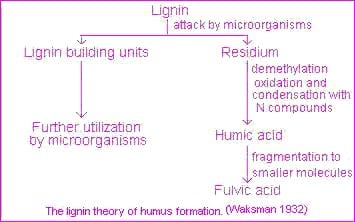
Once more, we consider the lignin and the “attack by microorganisms.” In a White Paper on the IFUS Website at https://www.impactfusionbrands.com/knowledgebase/part-1-plausible-scientific-evidence-of-the-efficacy-of-sgptm-in-bovine-herdperformance-through-ration-management/., your IFUS Scientific Team offers:
Furthermore, the complexity of the microbial genome in Sugarcane Bagasse is complex at best as evidenced by, “The variety of species that was found and that are known for biomass degradation shows that the bagasse pile was a valuable selective environment for the identification of new microbes and enzymes with biotechnological potential. In particular, lignin-modifying activities have not been reported previously for many of the species that were identified, suggesting future studies are warranted.”
“A snapshot of microbial diversity and function in an undisturbed sugarcane bagasse pile,” Leigh Gebbie, et.al, BMC Biotechnol. 2020 Feb 28;20:12. doi:
10.1186/s12896-020-00609-y (See Fig. 2)
Fig. 2.
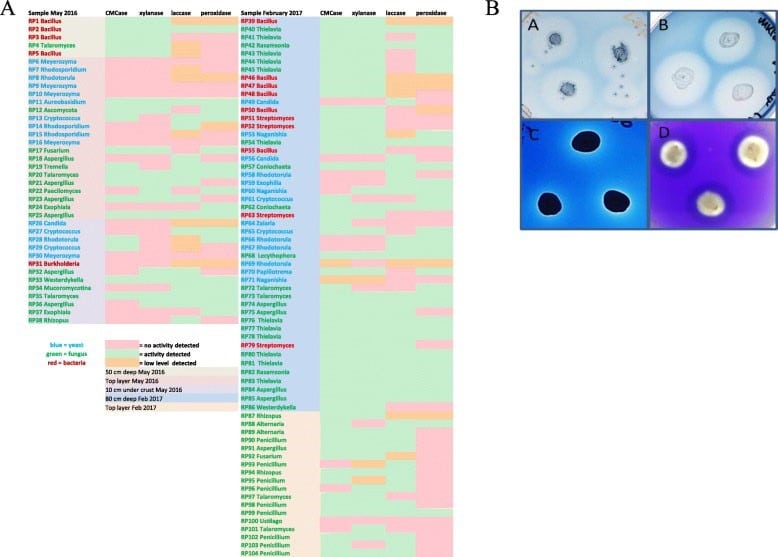
Screening of bagasse microbes for biomass-degrading enzymes. a The bacteria, yeast and filamentous fungi (RP1-RP103) isolated from different positions in the pile were screened for cellulase, xylanase, laccase and peroxidase on carboxymethyl cellulose with trypan blue dye, azo-xylan, remazol brilliant blue and azure B containing agar plates, respectively. Activity was scored as positive or not based on clearance zones around the colonies. Low activity indicates a very minor clearance zone that took longer than 7 days to become visible. Examples of each assay are shown in b”
Hence, there exists plausible evidence of the presence of a broad array of beneficial microorganisms in Sugarcane Bagasse. Furthermore, the visible presence of White Rot and Brown Rot Fungi, when overlayed with the incredibly accelerated decomposition of the Sugarcane Bagasse fiber found in SupremeAG™, provides qualitative data that supports IFUS’ claim that SupremeAG™ is high in Humic Substance. This accelerated degradation and depolymerization of lignin is believed to be driven by the addition of Nutri-Mastic™ and Carob to the Sugarcane Bagasse formulated then processed into SurpemeAG™.
Dr. Sutradhar and his team provide further insight into the degradation and depolymerization of lignin:
Pathway 2:
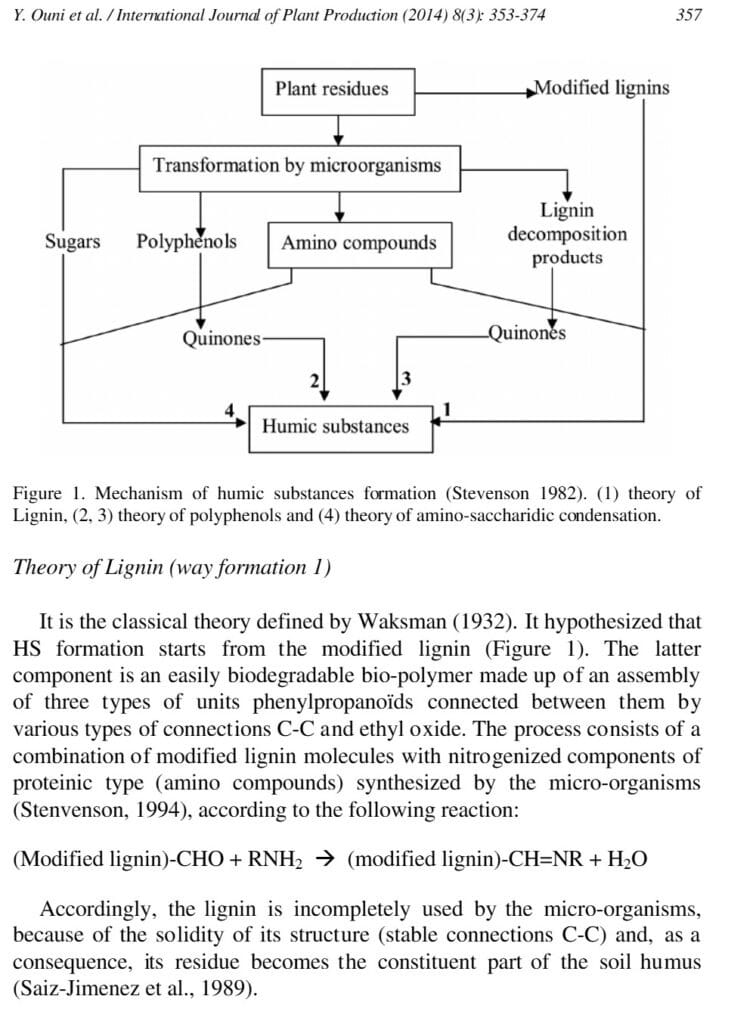
Source: Mechanism-of-humic-substances-formation-Stevenson-1982-1-theory-ofLignin-2-3.png (850×533):https://www.researchgate.net/profile/YoussefOuni/publication/262414337/figure/fig2/AS:667835118399503@1536235708676/

Mechanism-of-humic-substances-formation-Stevenson-1982-1-theory-of-Lignin-2-
3.png
Let us again remember the significance of White Rot Fungi and the complex biome found in Sugarcane Bagasse, which then transforms the lignin into Humic Substance and other key nutritive components that can be affectively applied to plants, animals, and at some point…humans.
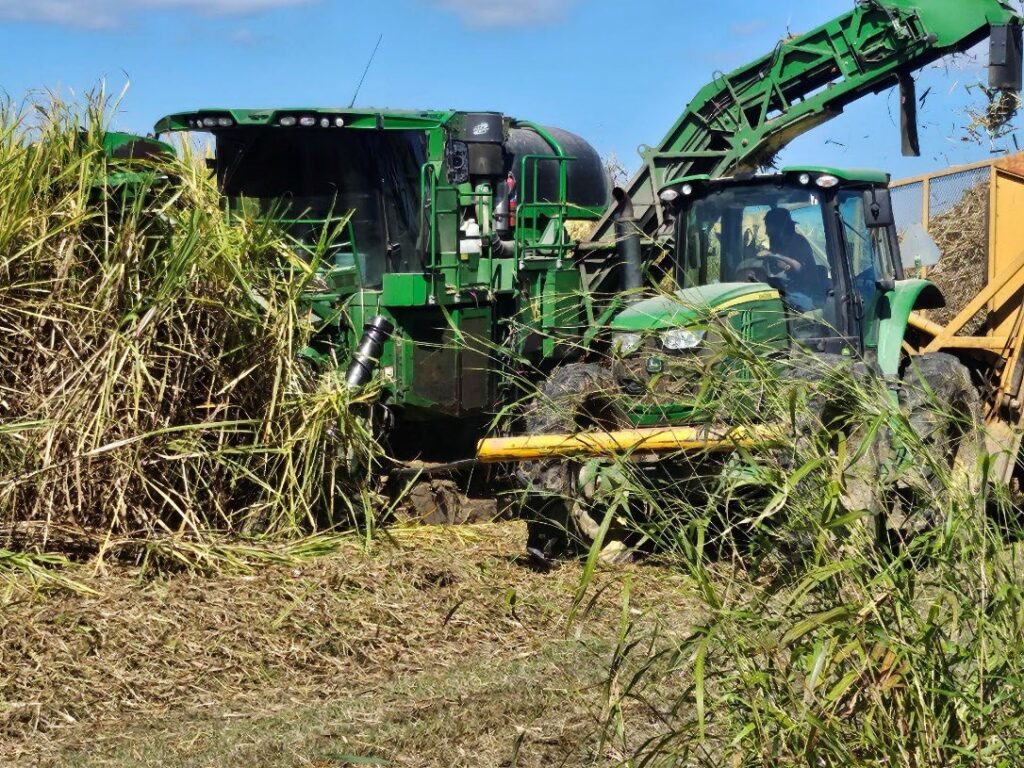
Source: “Intracellular pathways for lignin catabolism in white-rot fungi” written by Carlos del Cerro, et.al in “The Proceedings of the National Academy of Sciences: Systems Biology/Biological Sciences,” Feb. 23, 2021
Pathway 3: Flaig’s concept of humus formation
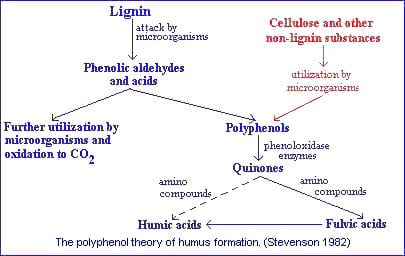
Source: The formation of humic substances: at
http://karnet.up.wroc.pl/~weber/powstaw2.htm
Please note that in Pathway 3, we see further interaction of microorganisms degrading, then depolymerizing the lignin in conjunction with cellulose and hemicellulose (all found in Sugarcane Bagasse). Also of note is the production of CO2, which cools the earth and is released from the soil such that the plant canopy can absorb it, process it through photosynthesis, and transform it into beneficial Oxygen critical to survival of life on Planet Earth. Hence, SupremeAG™ offers a plausible natural eco-friendly, cost-effective, and carbon sequestration mechanism
that produces healthier soil, healthier plants, healthier beneficial insects/bugs/worms, healthier animals, and healthier humans.
Pathway 4 – Sugar-amine condensation
“The initial reaction in sugar-amine condensation involves addition of the amine to the aldehyde group of the sugar to form the n-substituted glycosylamine. The glycosylamine subsequently undergoes to form the N-substituted-1-amino-deoxy2-ketose. This is subject to: fragmentation and formation of 3-carbon chain aldehydes and ketones, such as acetol, diacetyl etc.; dehydration and formation reductones and hydroxymethyl furfurals. All of these compounds are highly reactive and readily polymerize in the presence of amino compounds to form brown-colored products.”
Source: The formation of humic substances: http://karnet.up.wroc.pl/~weber/powstaw2.htm
What is striking is that Sugarcane is particularly unique in the Plant Kingdom, especially in consideration of the degradation and depolymerization of its lignin component.
The broad categories of various components of Sugarcane are illustrated below.
Source: General-composition-of-Sugarcane-Adapted-from-13.png (600×447)

(https://www.researchgate.net/profile/Larissa
Canilha/publication/233949726/figure/fig3/AS:213910767575043@14280117098
26/General-composition-of-Sugarcane-Adapted-from-13.png)
In the natural world, Sugarcane is one of the only grasses high in sucrose, which is made up on one unit of Glucose and one unit of Fructose. The Glucose / Fructose balance is of PARAMONT importance to all things living…especially humans and animals.
And, IFUS has qualitative evidence that when once Sugarcane is harvested from the fields, then processed into raw sugar, the residual bagasse begins its transformation into producing Humic Substances.
Sugarcane being harvested in SELA November 2025:
A field covered with freshly cut sugarcane tops and eventually burnt away eroding topsoil and causing added carbon-load to the environment. Note the tan coloration with fresh green and tinges of yellow both in the field and in the background. Per Diagram I above, this would suggest the presence of Fulvic Acid.
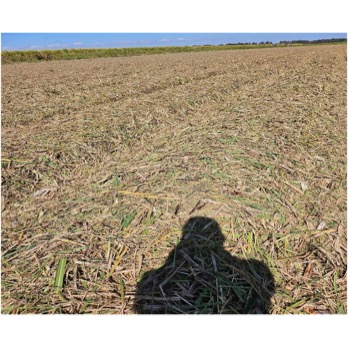
A close-up of freshly cut sugarcane tops covering the field, which if harvested would be an invaluable feedstock for SGP+™ and SupremeAG™. Note the tan and yellowish coloration, with some fresh green that will transform to yellow with time.

A Sugarcane Bagasse Pile in Louisiana resulting from Sugarcane processed in a Raw Sugar Mill creating Bagasse Mountains of sorts. Note the changing color. Per Diagram 1 above, this suggests the presence of Humic Acid.
Source: Uses for bagasse in Louisiana | Baton Rouge | theadvocate.com
How much sugarcane bagasse is produced in the world?
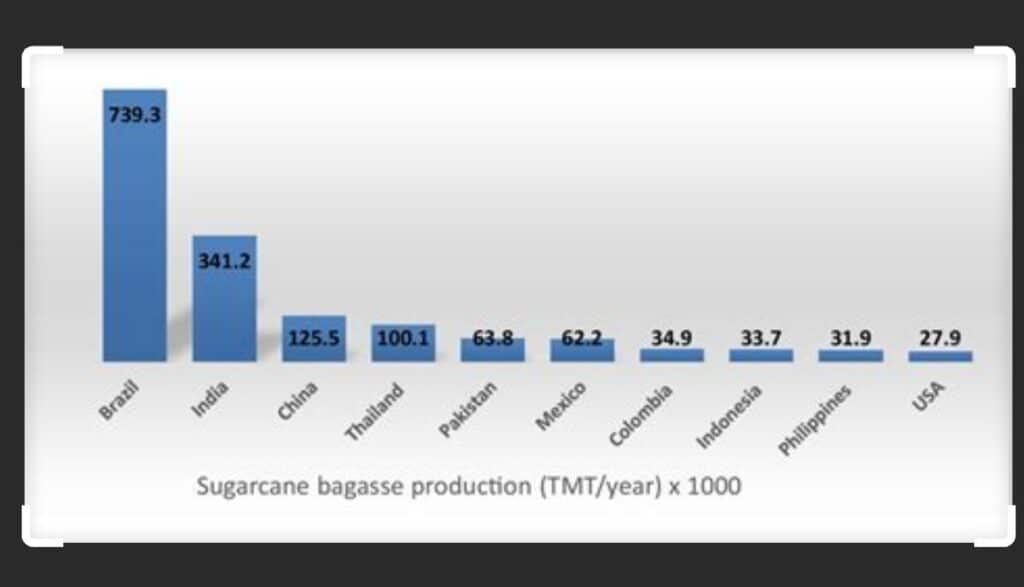
Source: Rahul Vikram Singh, et.al. Application of Sugarcane Bagasse in
Chemicals and Food Packaging Industry: Potential and Challenges March
2022Circular Economy and Sustainability 2(1):1-22, DOI:10.1007/s43615-02200167-9
Fresh SupremeAG™ mulched over aged Supreme(AG). Note the rusty-reddish color in the mulch as compared to the black of the older Supreme(AG) used as soil amendment.
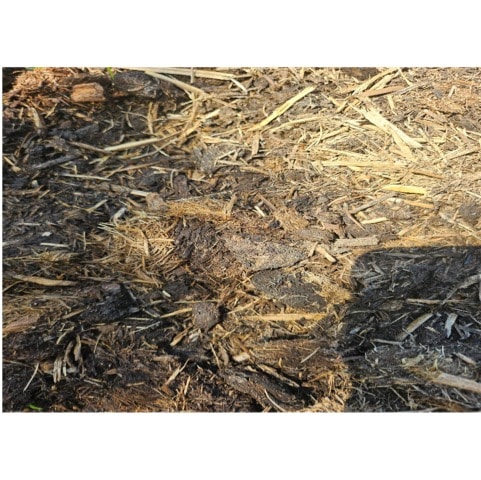
Slightly aged SupremeAG™ used as mulch. Note the coloration shifting and the reduction in the rust/reddish coloration into light brown. Again, per Diagram 1 above, this suggests the presence of Humic Acid.
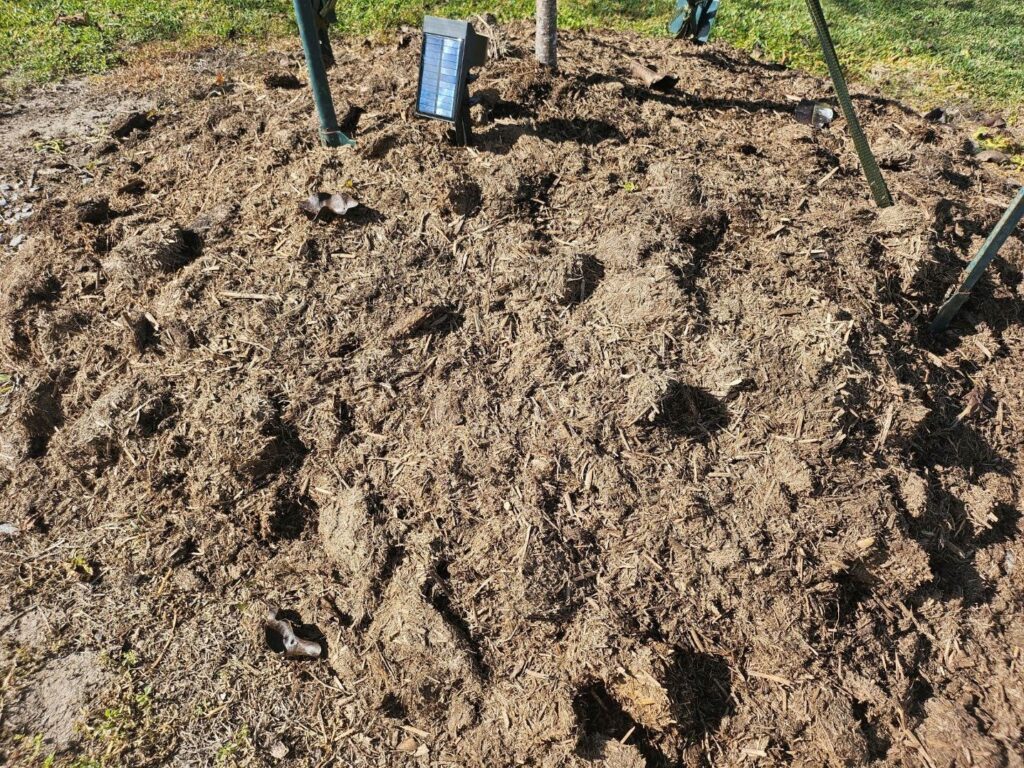
Roughly 9-12 month old Supreme(AG) applied as soil amendment. Note the dark grey-black coloration. Per Diagram 1 above, this suggests the presence of Humin.
Based on these qualitative observations, your IFUS Scientific Team portends that Humic Substance is found in SupremeAG™. The significance of this is illustrated in Diagram 2 below. Where it is proposed that synthetic Humic Substance can be produced, resulting in many positive impacts on the globe, IFUS contents that its natural process utilizes a readily available and annually renewable resource that can be transformed in an eco-friendly and cost-effective product that is potentially transformative.
IFUS also contends that the impact of using lignin (which is thought to be the second most prevalent biomaterial in the world behind chitin) from Sugarcane Bagasse would improve the quality of the Humic Substance, while creating an added eco-friendly cost benefit for the worldwide Sugar Industry.
Diagram 2:
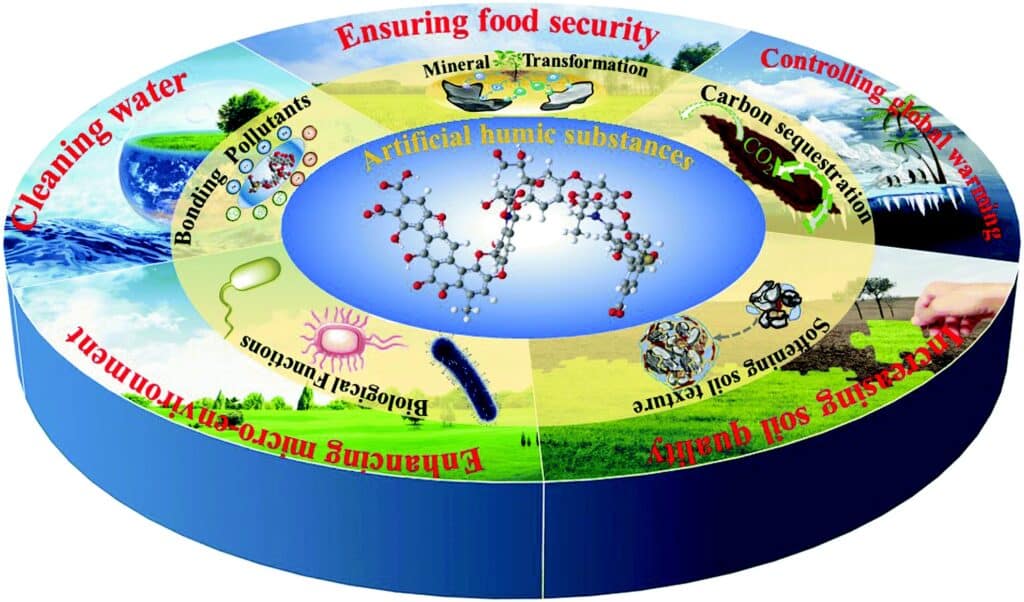
Source: d0cs01363c-f9_hi-res.gif (1980×1164)https://pubs.rsc.org/image/article/2021/cs/d0cs01363c/d0cs01363c-f9_hi-res.gif

Hence, your IFUS Scientific Team contends that SupremeAG™, when applied as a mulch, soil amendment, or both with Best Gardening Practices for the respective plant, tree, or shrub, can plausibly provide an all-natural ecofriendly, and cost-effective solution that reduces the need for synthetic fertilizers, pesticides, and herbicides (as well as water).
These impacts include (per Diagram 2):
- Ensuring Food Security
- Controlling Global Warming
- Increasing Soil Quality
- Enhancing Micro-environment
- Cleaning Water
Furthermore, the growth rates, yields, and other performance benefits of SupremeAG™ can contribute to a multitude of beneficial effects as illustrated in Diagram 3:
Diagram 3:
Source: F1.png (709×591) https://api.intechopen.com/media/chapter/78385/media/F1.png

All of this begs the question: What additional evidence does IFUS contend that it has?
The answer: Qualitative observations on the performance of Blackberry Vines planted in the Late Spring of 2025 at the IFUS Test Farm in SELA about 15.5 Miles WSW of NOLA.
Blackberry Vines soil amended and mulched with SupremeAG™ and pruned 3times”
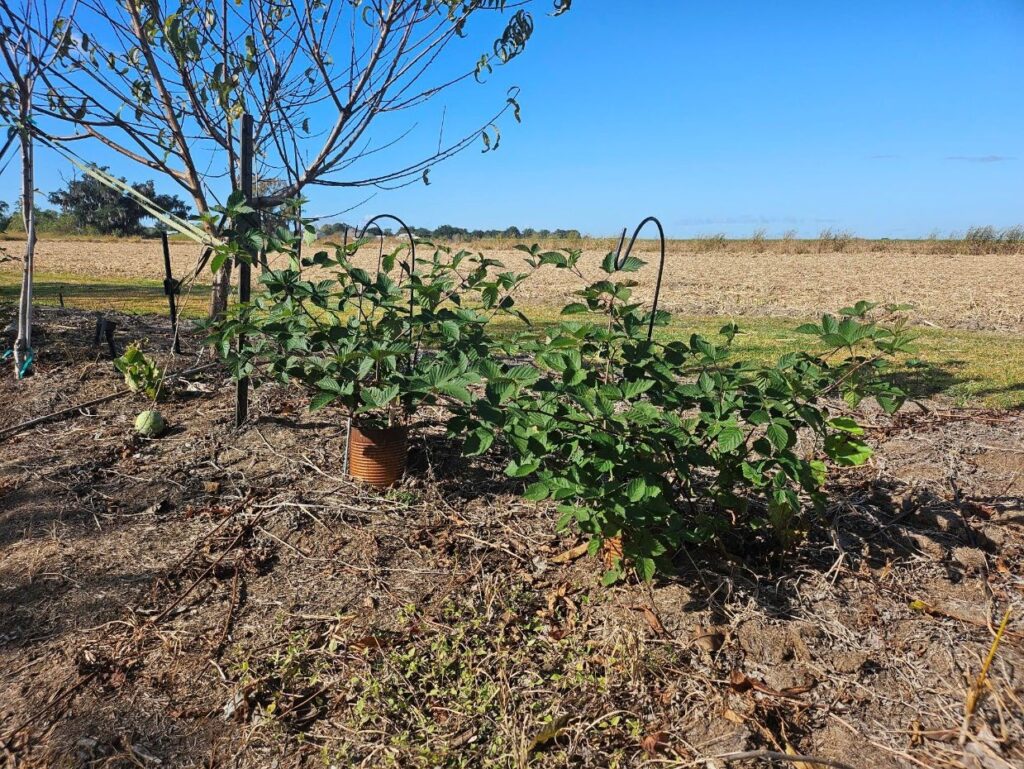
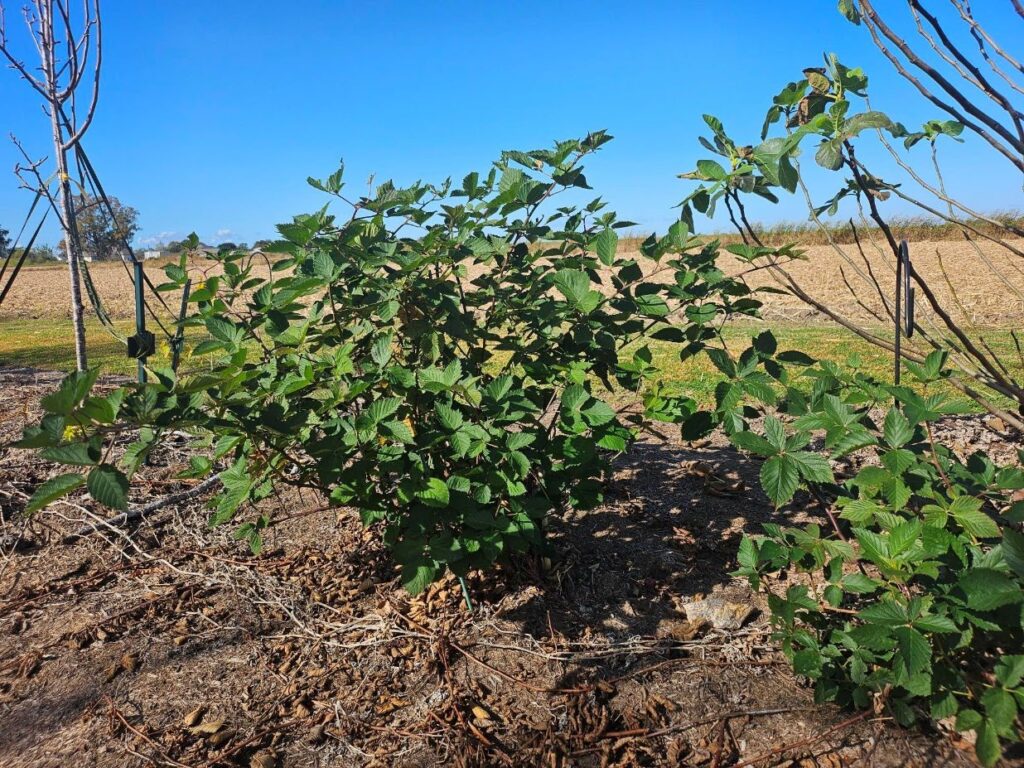
Blackberry Vines with NO soil-amendment or mulch with SupremeAG™…or as our Lead Scientist states, “Charlie Brown Christmas Tree Vines so in need of TLC from SupremeAG™.”
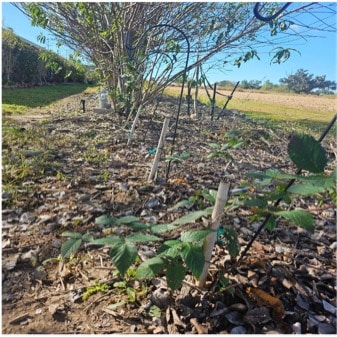
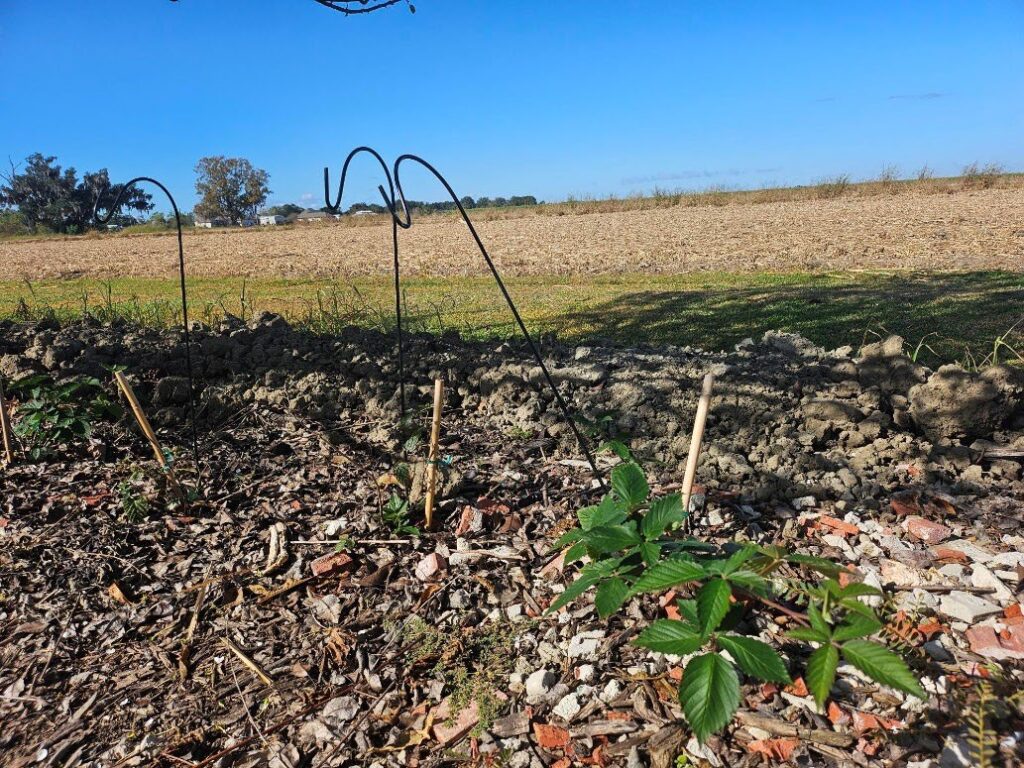
If IFUS can provide this type of growth deferential to plants, trees, and shrubs that yield higher quality and quantity fruits, nuts, vegetables, and more…and do so in a cost-effective and eco-friendly manner, what possibilities lay in wait for us.
“I must admit that when I personally read the science and see the data and observations, that suggests to me that your company has plausible solutions to many of the problems humanity is facing, I sometimes sit quietly stunned in profound awe. For me and for the dedicated men and women who are working with us to make your company successful, failure cannot be an option,” said Marc Walther, CEO of Impact Fusion International. “We continue daily to uncover scientific truths about our IFUS Product Lines…successful or not. And, we are provided encouragement through research, and the results from application of products as technologies. We continue to garner evidence that your company can provide eco-friendly and cost-effective products supported by technologies that actually work.”
We are “Back to work!”
For our customers of both Intact Digest™ and Intact Endurance™ you may now send your testimonials to:
mwalther@impactfusionintl.com We can also be reached at 1-800-775-4130 seven days a week.
About Impact Fusion Internaonal Inc.
Impact Fusion Internaonal, Inc. is in the business of markeng products in the “Health and Wellness” sector of all internaonal markets. It is the company’s mission to invent, develop and market these proprietary products worldwide for the health and well-being of humans and animals.
The informaon contained in this release includes some statement that are not purely historical and that are “forward-looking statements.” Such forward-looking statements include, but are not limited to, statements regarding our and their management’s expectaons, hopes, beliefs, intenons or strategies regarding the future, including our financial condion, results of operaons. In addion, any statements that refer to projecons, forecasts or other characterizaons of future events or circumstances, including any underlying assumpons, are forward-looking statements. The words “ancipates,” “believes,”
“connue,” “could,” “esmates,” “expects,” “intends,” “may,” “might,” “plans,” “possible,” “potenal,” “predicts,” “projects,” “seeks,” “should,” “would” and similar expressions, or the negaves of such terms, may idenfy forward-looking statements, but the absence of these words does not mean that a statement is not forward-looking. The forward-looking statements contained in this release are based on current expectaons and beliefs concerning future developments and the potenal effects on the pares and the corporate and administrave transacons. Forward-looking statements involve known and unknown risks, uncertaines and other factors, which may cause our actual results, performance or achievements to be materially different from any future results, performance or achievements expressed or implied by the forward-looking statements and represent our management’s beliefs and assumpons only as of the date hereof. Except as required by law, we assume no obligaon to update these forward-looking statements, even if new informaon becomes available in the future.
Contact:
Impact Fusion Internaonal Inc.
204 Highway 1011
Napoleonville LA 70390
1-800-775-4130
Email: mwalther@impacusionintl.comhtps://www.impacusionbrands.com/brands
Updates can be found at the official Impact Fusion Twiter account @impacusionI
#Foodintelligence #NewMexico #healthiercatle #Screwworms
#Intact #Digeson #Endurance #Germany #Colorado
#legislaon #bagasse #drought #SUAREC #Louisiana
#greenhousegases #methanegas #catle #dairy #Texasfloods
#Texaswildfires $Waygu #India #Black Farmers Naonal
Associaon #Supreme AG™ #SGP+™ #Oklahoma
#KECO 96.5 FM radio #India #Australia #Brazil #Argenna #Canada #Vietnam
You must be logged in to post a comment.